
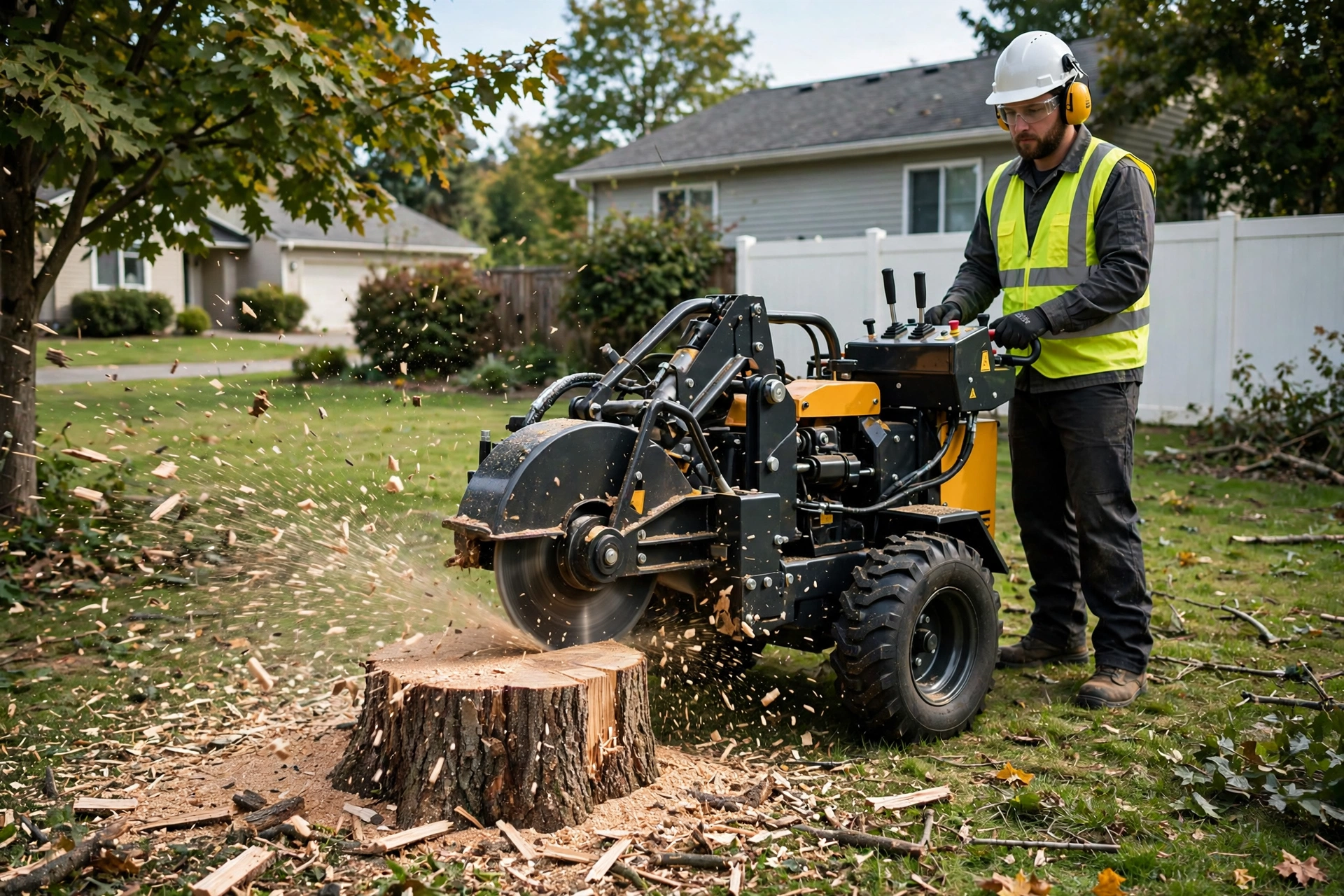
The tree’s gone, but the stump is still there — ugly, in the way of the mower, and slowly rotting. Most homeowners have the same three questions: how deep does grinding actually go, can I plant something over it, and will that rotting stump bring bugs?
Straight answers below, based on 17 years of grinding stumps in Peoria-area clay soil.
How Deep Do Professional Stump Grinders Actually Go in Central Illinois Soil?
Standard grinding goes 6 to 12 inches below grade — deep enough that you can spread topsoil over it, seed grass, and never know a tree was there. That’s the depth most homeowners need, and it’s what we quote by default.
Need deeper? We can go further on request — down to 18 inches or more for things like new construction footings, fence posts, or planting a large new tree in the same spot. Deeper grinding takes longer and costs more because there’s simply more wood and root to chew through.
One local note: Central Illinois clay is no joke. Our soil is dense, and in dry summers it sets up like concrete. Grinding through clay-bound roots is slower work than in sandy soil, which is one reason professional-grade equipment matters. A rental grinder from the hardware store will bounce off a big oak stump in clay all day — ours won’t.
Stump Grinding vs. Stump Removal: What’s the Difference?
People mix these up, and the difference matters for your yard and your wallet. Stump grinding shreds the stump in place down below grade, leaving the root system to decay naturally underground. It’s faster, cheaper, and far less destructive — your lawn stays mostly intact.
Stump removal means digging or pulling the entire stump and the root ball out of the ground. It leaves a crater — sometimes several feet wide — that has to be backfilled, and it tears up everything around it. We only recommend full removal when you need the spot completely clear for construction, like a new foundation or driveway.
For about 95% of homeowners, grinding is the right call. It’s what we do, and it’s what we’ll recommend unless your situation genuinely needs the full dig-out.
Can You Plant Fresh Grass Seed or a New Tree Right Over a Freshly Ground Stump?
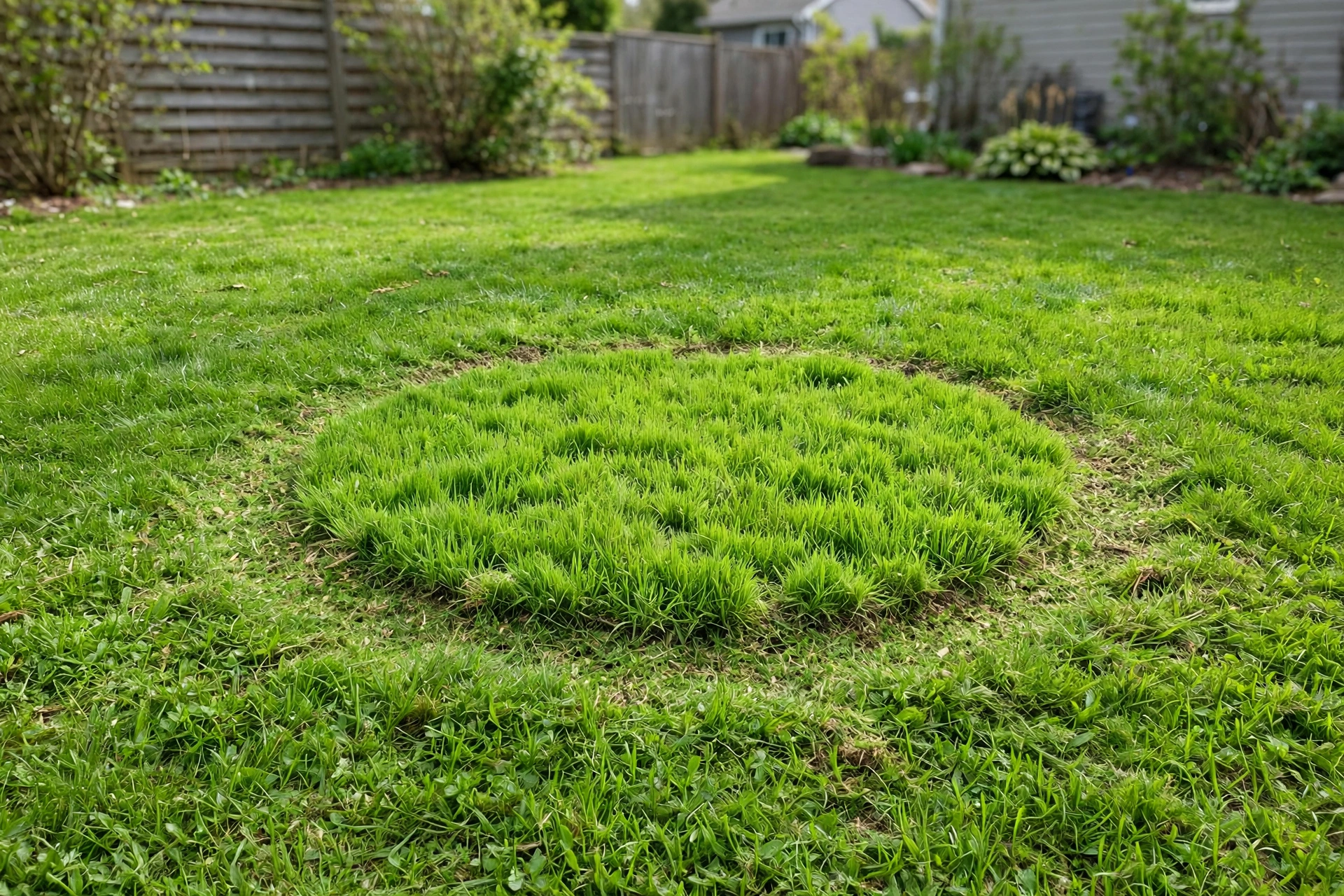
Grass seed: yes, almost immediately. Here’s the right way to do it: rake out as much of the wood-chip mulch as you can (it robs nitrogen from the soil as it decomposes), fill the hollow with quality topsoil, let it settle for a few weeks — it will sink as the underground roots decay — then top it off and seed. Most of our customers in East Peoria have grass growing over the spot within a month or two.
A new tree: yes, but not in the exact same hole. Plant your replacement tree a few feet away from the old stump location. The old root mass is still decaying underground, and planting directly into it means poor soil contact and a wobbly start. Also, avoid planting the same species right where the old one died — if disease or EAB killed it, the soil may still harbor problems. Different species, a few feet over, and your new tree will thrive.
Sod: works great over a ground stump, same prep as seed — just make sure the ground has finished settling first, or you’ll get a dip.
What Happens to All the Wood Chips and the Hole?
Grinding a medium stump produces a surprising mountain of chips — sometimes a full truckload. We can haul them away, or leave them for you as mulch (they’re great around other trees, just not against your foundation or mixed into garden beds fresh).
The hole left behind is bigger than the stump was, because the grinder also takes the surface roots. We backfill with the grindings and soil so you’re not left with a crater, but expect some settling over the next year as the deeper roots rot away. Topping off with a bag of topsoil next spring is normal — not a sign something went wrong.
Does Leaving an Old Tree Stump in Your Yard Attract Termites, Ants, and Pests?
Yes — this is the part most people underestimate. A rotting stump is a five-star hotel for pests. Subterranean termites love decaying wood, and a stump sitting in damp Illinois clay is prime real estate. Once termites establish a colony in the stump, your house foundation is the next stop — and that’s a much more expensive problem.
Carpenter ants are the other big one. They don’t eat wood like termites do, but they hollow it out for nests, and a soft rotting stump is perfect. From there, they explore — decks, fences, and eventually your home’s framing. Wood-boring beetles, grubs, and fungi move in too, and the whole rotting mess can spread disease to your healthy trees.
Grinding the stump removes the food source and the habitat in one visit. Compared to a termite treatment — or termite damage — stump grinding is cheap insurance. If you’ve got an old stump you’ve been meaning to deal with, this is your sign.
Should You Grind the Stump Yourself With a Rental Grinder?
We get asked this a lot, so here’s the honest breakdown. A rental grinder costs $150 to $300 a day around Peoria, plus the trailer, plus your Saturday. For a small, soft-wood stump in easy soil, a determined homeowner can get it done.
But most stumps aren’t small or easy. Rental grinders are underpowered compared to professional machines — they’ll chatter and bounce on hardwood stumps and barely scratch clay-bound root flares. They’re also genuinely dangerous: the cutting wheel doesn’t care what it grabs, and every year people get hurt using unfamiliar equipment. Flying debris is no joke either — pros use barriers and keep a clear zone for a reason.
Our take: if the stump is under a foot wide and you like that kind of project, go for it carefully. Anything bigger, anything near utilities or structures, or anything in our lovely dense clay — call us. By the time you add up the rental, the transport, and your time, professional grinding usually costs about the same, and it’s done in under an hour with zero risk to you.
How Long Does Stump Grinding Take?
Less time than you’d think. A small stump — say, under a foot across — takes 15 to 30 minutes. A medium stump runs 30 to 60 minutes. Big hardwood stumps, especially old oaks with wide root flares in clay soil, can take an hour or two.
Most of our jobs in the Peoria area are done in a single visit, often the same day as the tree removal. You don’t need to be home the whole time — just make sure we can get to the backyard. We’ll text you when we’re done.
Related Articles
- Best Time to Plant a Tree in Illinois | Fall vs Spring
- Best Replacement Trees to Plant in Peoria, IL (After a Removal)
- Stump Grinding Cost in Peoria, IL: Price & Time (2026)
Get That Stump Gone — Free Estimates in Peoria
One visit, below-grade grinding, full cleanup, and honest advice on what to plant next. That’s how we’ve done it for 17 years across our service areas. Check out our full tree services in Peoria or call 309-250-8333 for a free estimate.
Curious about tree care basics? The Morton Arboretum has solid guides on planting and tree aftercare for Midwest homeowners.
Listen to This Article
Prefer listening? Hear the full article narrated:
Peoria Tree Removal Co.
(309) 250-8333
info@treeremovalpeoriail.com
https://treeremovalpeoriail.com/
114 W Forrest Hill Ave, Peoria, IL 61604, USA
Tree Service Company
3 Responses