Tree Removal Morton, IL
Peoria Tree Removal Co. provides tree removal for homeowners and businesses throughout Morton, Illinois, handling everything from a single dead tree in a backyard to storm-damaged limbs threatening a roof or driveway. Our crews are ISA Certified Arborists with 17 years of experience, fully licensed and insured, and TCIA Accredited. If you’re trying to decide whether a tree needs to come down or can be saved, call (309) 250-8333 for a free on-site estimate.
Professional Tree Removal for Morton Homes and Businesses
Not every tree problem is obvious. A tree can look fine from the street and still have a compromised root system underneath, or it can look concerning and actually be structurally sound with the right pruning. Morton’s residential neighborhoods, many built out over the past several decades with mature shade trees, see both situations regularly — and guessing wrong in either direction costs money or creates risk.
That’s why the first step is always an assessment, not a quote. An ISA Certified Arborist evaluates trunk condition, canopy health, and root stability before recommending removal, so you’re not paying to take down a tree that only needed trimming, and you’re not left with a hazard that gets worse through winter storms.
Tree Removal Service in Morton, IL
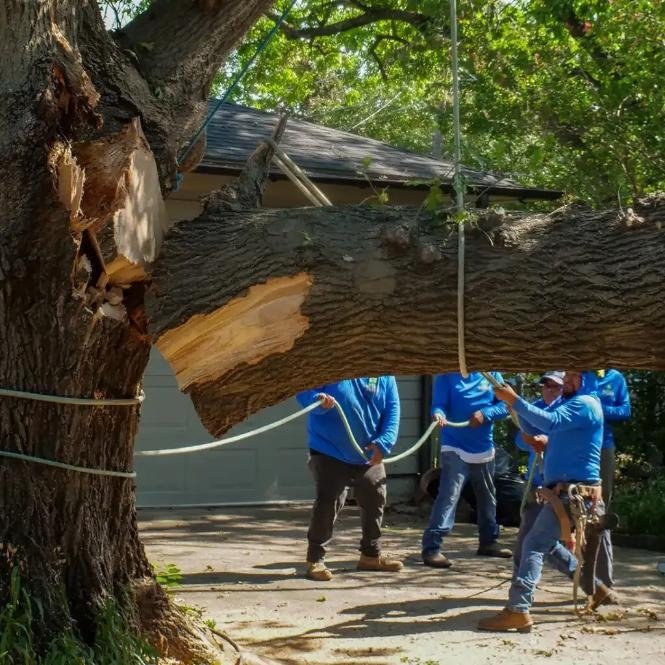
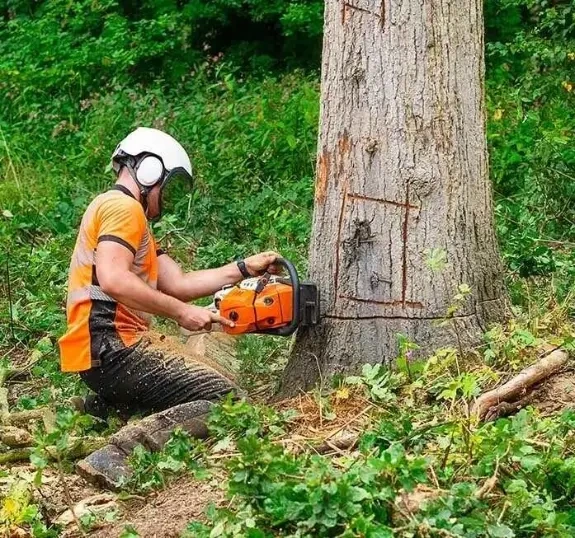
Tree removal is not simply cutting a trunk and letting the tree fall. The safest approach depends on the tree’s size, condition, location, surrounding structures, access to the property, and the potential direction of movement as sections are removed. A professional assessment helps determine whether complete removal is appropriate and how the work should be carried out.
Peoria Tree Removal Co. serves Morton, IL, as part of its Central Illinois service area. We provide tree removal for residential properties as well as commercial properties where a dead, damaged, diseased, or hazardous tree creates a concern for people, buildings, vehicles, access routes, or the surrounding landscape.
Our goal is straightforward: identify the tree problem, determine the appropriate removal approach, complete the work safely, and leave the property in a usable condition.
Residential Tree Removal in Morton
For homeowners in Morton, a tree removal project often involves more than the tree itself. Trees can be positioned close to roofs, garages, fences, landscaping, driveways, patios, sheds, or neighboring property. A removal plan needs to account for those surroundings before cutting begins.
Residential tree removal should be planned around the property, not just the tree. The crew must consider where branches and sections can safely go, how equipment can access the site, and how to protect areas that should remain undisturbed.
Peoria Tree Removal Co. can help homeowners address situations involving dead trees, hazardous trees, storm damage, unwanted trees, and trees that have become difficult to manage because of their size or location.
If a tree is close to your house or another structure, do not assume that its proximity makes removal impossible. It means the removal needs to be properly assessed and planned.
Hazardous Tree Removal in Morton, IL
A hazardous tree deserves attention before the problem becomes an emergency. Trees can become dangerous because of severe decay, deadwood, structural defects, storm damage, broken limbs, significant leaning, or other conditions that affect their stability.
Hazardous tree removal in Morton is intended to address trees that present a meaningful risk to people or property. The urgency depends on the actual condition of the tree and what is located around it.
A tree that appears stable from the ground may still have serious defects that are not obvious to an untrained observer. Likewise, a leaning tree is not automatically dangerous; the direction, degree of lean, root condition, structural integrity, surrounding targets, and other factors matter.
If you are concerned about a tree near your home, driveway, business, or another frequently used area, having it professionally evaluated is a better first step than attempting to determine its safety from appearance alone.
Free Estimate • 24/7 Emergency Response
What Include?
- Free Emergency Assessment
- 24/7 Rapid Response
- Hazardous Tree Removal
- Storm Debris Cleanup
- Licensed & Insured Professionals
Featured on Trusted Review Platforms

24/7 Tree Service
Emergency Tree Removal in Morton, IL
When a tree has fallen across a driveway, broken through a roof, split after severe weather, or left large limbs suspended over a property, the situation can require prompt professional attention. Emergency tree removal in Morton focuses on making a damaged tree or fallen tree safe to address while reducing additional risk to people and property.
Storm-damaged trees can be unpredictable. A partially attached limb may shift, a split trunk may remain under tension, or a damaged tree may be resting against another structure. These conditions make emergency tree work different from routine removal.
If a tree has fallen on your property, avoid walking beneath hanging branches or attempting to cut large sections yourself. If electrical lines are involved, stay away from the area and contact the appropriate utility provider.
For urgent tree problems in Morton, contact Peoria Tree Removal Co. so the situation can be evaluated and the appropriate removal or cleanup work can be determined.
24/7 Tree Service
Tree Trimming and Pruning When Removal Services
Tree trimming and pruning can be appropriate when the objective is to remove problematic branches, improve structure, manage growth, or address deadwood without removing the entire tree. Whether pruning is appropriate depends on the tree’s condition and the reason the work is being considered.
This distinction matters because removing a healthy tree unnecessarily is not always the best solution. On the other hand, pruning cannot correct every structural or safety problem.
If you are uncertain whether a tree in Morton needs to be removed or simply needs professional pruning, an assessment can help identify the more appropriate service.
24/7 Tree Service
Stump Grinding and Removal
Stump grinding is a separate service that reduces the remaining stump below or near ground level so the area can be used or landscaped more easily. The depth and extent of grinding depend on the stump, its location, and the intended use of the area.
If you are planning a new lawn, garden, planting area, walkway, or other improvement where the tree once stood, stump grinding may be worth considering as part of the overall project.
Peoria Tree Removal Co. also provides stump grinding and removal services, allowing Morton property owners to address the remaining stump after a tree has been removed.
For customers who need more than just the tree cut down, you can learn more through the site’s Stump Grinding & Removal service page.
24/7 Tree Service
Arborist and Tree Health Services in Morton
Tree removal is sometimes only one part of a larger tree-health decision. If you are unsure whether a tree is declining, diseased, structurally compromised, or worth preserving, an arborist-focused evaluation can provide useful information before you commit to removal.
Arborist tree service helps property owners understand tree condition, structural concerns, health problems, and possible management options. Depending on the circumstances, those options may include pruning, monitoring, treatment, cabling or bracing, or removal.
Peoria Tree Removal Co. states that its tree-care professionals are ISA Certified. The International Society of Arboriculture (ISA) is a professional organization associated with arboriculture and tree-care education and certification.
Certification should complement practical evaluation rather than replace it. The condition of the specific tree and its surroundings remains central to deciding what work is appropriate.
24/7 Tree Service
Commercial Tree Removal in Morton, IL
Commercial properties can have different tree-removal requirements from residential properties. Businesses, property managers, contractors, and commercial property owners may need to consider parking areas, sidewalks, entrances, buildings, customer access, landscaping, and normal site operations.
Commercial tree removal in Morton is focused on addressing tree hazards and removal needs while considering how the work affects the surrounding property and its use.
A dead or damaged tree near a commercial building can create a concern for employees, customers, vehicles, or property. Fallen trees and storm-damaged limbs can also interfere with access and normal operations.
Peoria Tree Removal Co. provides tree services for commercial properties as well as residential customers. The scope of work should be evaluated according to the individual property and the trees involved.
Why Choose Us
Why Choose Peoria Tree Removal Co.
Choosing a tree-removal company is ultimately about more than finding someone who owns a chainsaw. A professional service should be able to look at the tree and surrounding property, identify relevant hazards, explain the work that needs to be done, and provide a clear path from assessment through cleanup.
17 years of local experience.
We've removed hazardous, storm-damaged, and oversized trees throughout Tazewell County, including tight residential lots and commercial properties with real access constraints.
ISA Certified Arborists.
Every assessment is done by a certified arborist through the International Society of Arboriculture — not a general laborer estimating tree health by eye. That distinction matters most when the decision is removal versus treatment.
Licensed and insured.
Property damage or injury during removal is a real risk with an uncertified crew. We carry full licensing and insurance.
TCIA Accredited
Our accreditation through the Tree Care Industry Association reflects adherence to recognized safety and operational standards in professional tree care.
Upfront, written pricing.
You get a confirmed price after an actual on-site assessment, not a phone guess.
Residential & Commercial Emergency Tree Services
Storm damage doesn't care whether it hits a home or a business — we respond to both with the same urgency. If a tree is threatening a structure, vehicle, or safe access, our ISA Certified Arborists prioritize the call and get there fast.
Tree Removal Equipment and Safety
Tree removal may involve specialized equipment depending on the size and location of the tree. However, equipment should never be assumed based on a generic service description.
The equipment and removal techniques needed for a Morton tree-removal project depend on the tree, property access, surrounding hazards, and complexity of the work. A straightforward tree in an open area can require a very different approach from a mature tree beside a house.
Potential professional tree-care equipment can include chainsaws, ropes and rigging systems, chippers, stump grinders, bucket trucks, and other equipment when appropriate. The specific equipment used should match the actual project rather than being presented as a guarantee for every removal.
Safety also involves more than equipment. A removal plan should account for falling material, tree movement, work-zone access, nearby structures, utility hazards, and people or vehicles that could enter the work area.
For homeowners, this is one reason professional tree removal is different from simply hiring someone to cut down a tree. The removal method needs to account for the consequences of every major cut.
Tree Removal Throughout Morton and Nearby Central Illinois Communities
Morton remains the primary service location for this page, but Peoria Tree Removal Co. also serves surrounding communities as part of its broader Central Illinois service area.
Customers in nearby Peoria, East Peoria, Pekin, Washington, Bartonville, Chillicothe, and Peoria Heights may also have access to the company’s tree-care services, depending on the project and service requirements.
For a homeowner specifically searching for tree removal in Morton, IL, however, the important consideration is whether the company can evaluate and handle the particular tree on the property—not simply whether its service area contains the city name.
Professional Tree Removal Works in Morton
The tree removal process varies from one property to another, but a professional removal generally begins with evaluating the tree and its surroundings rather than immediately cutting.
A typical tree removal project starts with an assessment, followed by removal planning, controlled cutting and lowering where necessary, and cleanup of the resulting debris. The complexity of each stage depends on the tree’s condition, size, location, and access.
Assessing the Tree and Property
The first step is understanding what is being removed and what surrounds it. The tree’s condition, size, lean, major limbs, trunk structure, access, nearby buildings, and other potential hazards all influence the removal plan.
This evaluation also helps determine whether complete removal is actually necessary. In some situations, pruning or another tree-care service may be a more appropriate option.
Planning the Removal
Once the tree and work area have been evaluated, the removal approach can be determined. An open-area tree may allow a different method than a tree standing beside a home or in a narrow backyard.
The objective is to establish how the tree or its sections can be brought down while maintaining control over the work area.
Controlled Sectional Removal
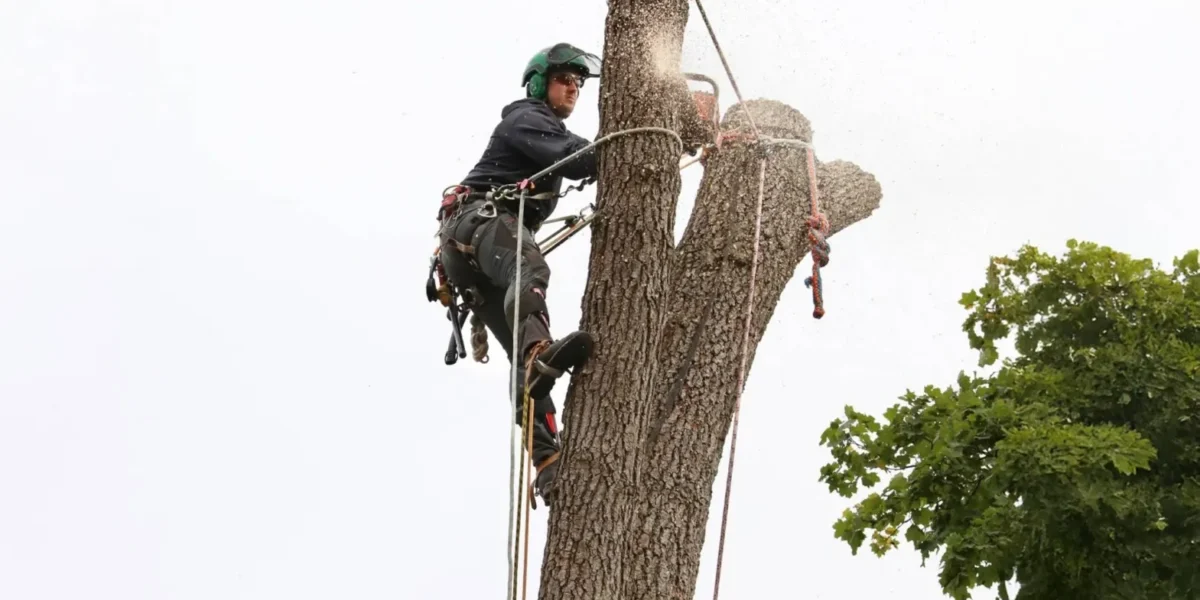
When there is insufficient room for the entire tree to be felled safely, the tree may need to be dismantled in sections.
Rigging uses ropes and controlled lowering techniques to move tree sections toward a designated landing area. This can be particularly useful around structures and other obstacles, although the appropriate method depends on the specific tree and site.
Cutting and Lowering
The removal itself is performed according to the selected plan. Large limbs and trunk sections may be reduced into manageable pieces rather than allowing large sections to fall uncontrolled.
The exact cutting and lowering technique depends on the tree’s structure and the available working area.
Debris Cleanup
Tree removal produces branches, logs, leaves, and other debris. Cleanup is an important part of completing the project because the property should not simply be left with the material created by the removal.
The amount of debris and disposal requirements depend on the size of the tree and the scope of the project. If you want stump grinding or additional work after removal, that can be discussed as part of the project.
Contact Us
309-250-8333
Frequenly ASked questions
Common Questions About Our Services
Peoria Tree Removal Co. provides professional tree removal for residential and commercial properties in Morton, Illinois. The company states that it has 17 years of experience and is licensed and insured, ISA Certified, and a TCIA Accredited Tree Care Company.
The timing depends on the tree's condition, urgency, availability, access, and scope of work. A tree that has fallen onto a structure or created an immediate hazard should be treated differently from a non-urgent removal. Contact the company and explain the situation so the appropriate next step can be determined.
Tree removal may be covered by homeowners insurance in certain circumstances, particularly when a covered event such as a storm causes a tree to damage an insured structure, but coverage depends on the individual policy and circumstances.
Yes, large trees near houses can often be removed when the site is properly assessed and the appropriate removal method is used. The tree's size, condition, proximity to the structure, access, and available working space all affect the removal plan.
There is no reliable flat price for removing a 30-foot tree because height alone does not determine the project's difficulty. A 30-foot tree standing in an open yard can be very different from a 30-foot tree leaning toward a house, growing beside a garage, or surrounded by landscaping and limited access.
A tree-removal estimate should account for the work required for the specific tree and property. Ask whether the estimate includes cutting, removal of branches and logs, cleanup, debris disposal, and stump grinding. The exact scope should be clarified before work begins.
Yes, storm-damaged and fallen trees can be evaluated for professional removal or cleanup. Because damaged trees can contain unstable limbs and sections under tension, homeowners should avoid attempting complicated storm cleanup themselves.
Stay away from the tree and any potentially energized lines and contact the appropriate utility provider. Do not attempt to cut or move a tree that has contacted electrical infrastructure. The area can remain hazardous even when the tree appears stable.
There is no dependable way to guarantee free private-property tree removal in Morton. Some circumstances may involve utility companies, municipal responsibilities, insurance coverage, or other arrangements, but those situations depend on who owns the tree, where it is located, why it must be removed, and the applicable rules.
There is not one guaranteed cheapest season for tree removal in Morton. Pricing depends primarily on the tree and scope of work rather than simply the calendar month.