Important first: this is general information about Illinois tree law, not legal advice. Tree disputes can get complicated fast, and the details of your situation matter. For advice about your specific case, talk to a local attorney.
That said, most neighbor tree fights in the Peoria area come down to the same few questions: Can I cut branches hanging over my yard? Can I make my neighbor remove a dangerous tree? Who pays? Here’s how Illinois generally handles it — in plain English.
The Self-Help Rule: You Can Trim Back to the Property Line
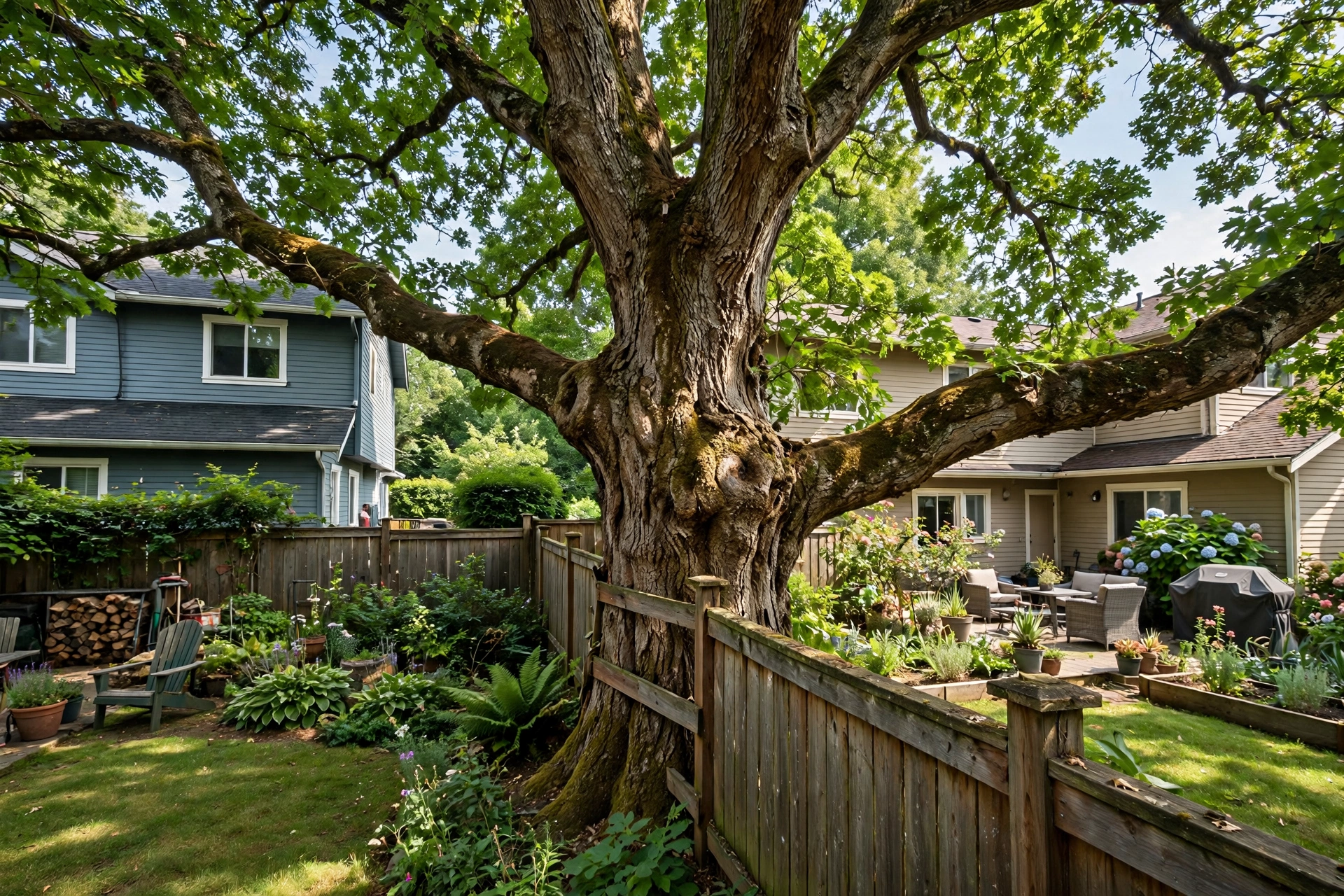
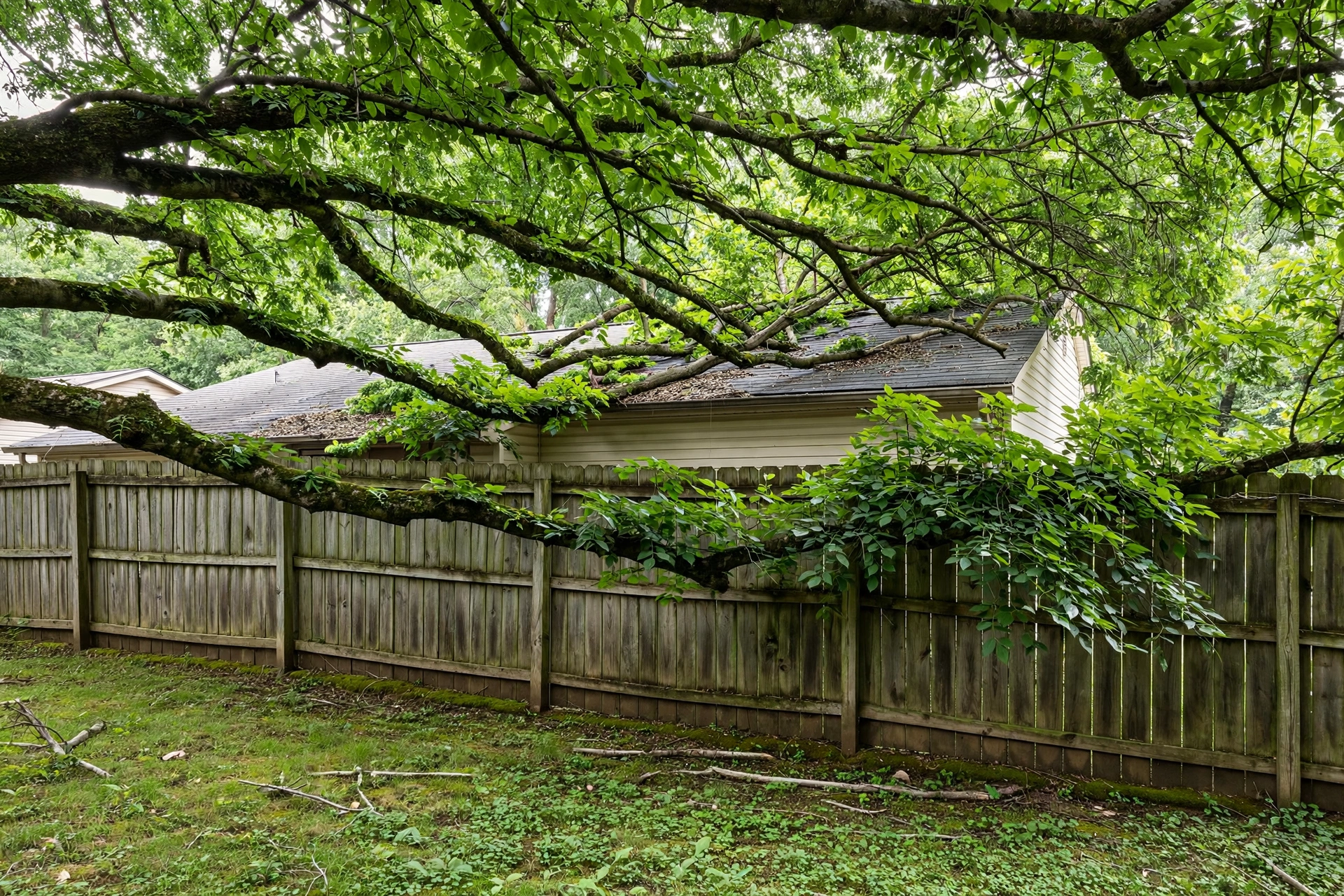
Illinois follows what’s called the “self-help” rule. If your neighbor’s tree has branches hanging over your property, you may trim them back to the property line without your neighbor’s permission. Same goes for roots crossing under your yard — you can cut them at the line.
This surprises a lot of people, and honestly it’s the rule that resolves most disputes. You don’t have to live with a branch scraping your roof while you wait for a neighbor who won’t return your calls. You can deal with your side of the line yourself.
But — and this is a big but — the right to trim comes with strict limits, which is where people get into trouble.
What You Absolutely Cannot Do
You may not trespass onto your neighbor’s land to do the trimming. The work has to happen from your side of the line. If the only safe way to reach the branches is from their yard, you need their permission — or a professional crew that can work it out with rigging from your side.
You may not kill or seriously harm the tree. You can cut back to the line, but if your trimming is so aggressive that the tree dies or is permanently disfigured, your neighbor can come after you for damages. Illinois takes wrongful tree cutting seriously — the Illinois Wrongful Tree Cutting Act can hit violators with significant penalties for cutting or damaging someone else’s tree.
You pay for it. The trimming on your side is your expense, even though it’s your neighbor’s tree. That’s the trade-off built into the self-help rule.
Practical tip: hire a professional for boundary trimming. A certified crew knows how to cut back to the line without harming the tree — which protects you from a damage claim. We’ve done plenty of these jobs in Washington and across Tazewell County, and doing it right the first time is always cheaper than a lawsuit.
When the Tree Sits Right on the Property Line
A tree whose trunk straddles the boundary line is generally considered jointly owned — it belongs to both neighbors. That means neither of you can remove it or make major changes to it without the other’s consent.
This is where most of the really bitter disputes start. One neighbor wants the tree gone; the other loves it. Legally, the neighbor who wants it removed can’t just hire someone to take it down — doing so without consent can trigger the same wrongful-cutting liability as cutting a tree that’s entirely on someone else’s land.
If you’re in this situation, get the agreement in writing before any work starts. A simple signed note saying both parties agree to the removal and how costs are split can save enormous headaches later.
Can You Legally Force a Neighbor to Cut Down a Dangerous Tree?
Here’s the hard truth: you generally cannot force a neighbor to cut down a healthy tree just because you don’t like it — even if it drops leaves in your gutters or blocks your view. Courts don’t order removals over annoyances.
A dead or dangerous tree is different. If your neighbor’s tree is dead, dying, or visibly hazardous — leaning hard, dropping big limbs, hollow trunk — and they know about it (or should know), they can be held liable if it causes damage. The key legal concept is notice: once the owner has been put on notice that the tree is dangerous, ignoring it looks a lot like negligence.
That’s why the single most important thing you can do is notify your neighbor in writing. A dated letter or email describing the hazard creates a paper trail. If the tree later falls and damages your property, that notice is powerful evidence.
Some municipalities in the Peoria area also have ordinances letting the city order a property owner to remove a hazardous tree — and bill them if they refuse. If a tree is an imminent threat, calling the city is a legitimate step, not an escalation.
For a solid overview of how Illinois handles overhanging branches specifically, see this Illinois-focused legal guide. And remember — for your specific situation, talk to a local attorney.
What About a Neighbor’s Tree That’s Actively Damaging Your Property?
There’s a difference between a tree that’s merely annoying and one that’s causing real damage right now — roots cracking your driveway, branches tearing up your roof shingles, roots invading your sewer line. In these cases, your options are broader.
First, the self-help rule still applies: you can cut the roots or branches on your side. For sewer line invasions specifically, many homeowners have the roots cleared by a plumber and then deal with the tree separately — but document everything, because if the damage is ongoing, you may have a claim against the tree’s owner for the cost of repairs.
Second, talk to your homeowner’s insurance. Some policies cover damage from a neighbor’s tree, and your insurer may then go after the neighbor (this is called subrogation). Your agent can tell you what’s covered — call them before you pay for repairs out of pocket.
Third, the written-notice rule from above applies double here. If you’ve told your neighbor in writing that their tree is damaging your property and they do nothing, their liability only grows. Keep copies of every letter, email, and text.
Practical Steps That Actually Resolve Tree Disputes
After 17 years working in Peoria neighborhoods, here’s what actually works, in order:
1. Talk first. Most disputes end with a conversation. Your neighbor may not even realize the tree is a problem. Be friendly, be specific, and suggest splitting the cost — even though the law says you’d pay for your side, offering to share often gets a yes.
2. Put it in writing. If talking doesn’t work and the tree is genuinely dangerous, send a written notice. Keep a copy. Date it. Describe the hazard specifically — “the dead limb over my driveway,” not “your tree.”
3. Get an arborist’s written hazard assessment. This is where we come in. A written assessment from an ISA Certified arborist documenting that a tree is dead or hazardous carries real weight — with neighbors, with cities, and if it ever comes to it, in court. We provide these across our service areas.
4. Call the city for truly dangerous trees. If a tree threatens a road, a sidewalk, or a structure and the owner won’t act, your municipality can intervene.
Wondering whether the tree in question even needs to come down? Our guide on when a tree should be removed in Peoria, IL covers the signs that separate a nuisance from a genuine hazard.
Related Articles
- They Cut Down the Wrong Trees: What a $100,000 Settlement Teaches Illinois Homeowners
- Who Is Responsible When a Tree Falls on Your House in Peoria, IL?
- Do I Need a Permit to Cut Down or Remove a Tree in Peoria, IL or Surrounding Municipalities?
Need a Professional Assessment? We’re Here to Help
We can’t give legal advice — but we can tell you exactly what condition a tree is in, in writing, from an ISA Certified company with 17 years in the Peoria area. That assessment is often what finally gets a neighbor or a city to act.
Call 309-250-8333 for a free estimate, or explore our tree services in Peoria. For general tree-care knowledge, TreesAreGood.org is an excellent resource.
Listen to This Article
Prefer listening? Hear the full article narrated:
Peoria Tree Removal Co.
(309) 250-8333
info@treeremovalpeoriail.com
https://treeremovalpeoriail.com/
114 W Forrest Hill Ave, Peoria, IL 61604, USA
Tree Service Company
5 Responses