
October in Central Illinois smells like woodsmoke for a reason. The first frost usually lands between October 11 and 20, so by mid-month, trucks stacked with split oak and hickory are rolling down War Memorial Drive.
There’s a story out of Washington state worth hearing before you buy. This August, Washington banned untreated firewood from crossing into the state — a direct response to the emerald ash borer showing up there this summer, while the spotted lanternfly keeps hitching rides on firewood and vehicles.
Illinois isn’t immune. We’ve got ash trees worth protecting, maples and walnuts the lanternfly loves, and a whole lot of firewood changing hands right now.
- Washington’s 2026 rule: untreated out-of-state firewood banned as of Aug 18; imported wood must be heat-treated to a 160°F core for 60 minutes and labeled “Approved Pest Free.”
- EAB’s toll: more than 100 million ash trees killed across the U.S. in two decades.
- Spotted lanternfly eggs: laid in fall, look like smears of dried mud, and hatch wherever the wood ends up.
- Safe-distance rule of thumb: buy firewood within about 50 miles of where you’ll burn it.
- Seasoning: 6–12 months of drying makes better firewood — but it isn’t a guaranteed pest kill.
- Peak buying season in Central Illinois: September through November.
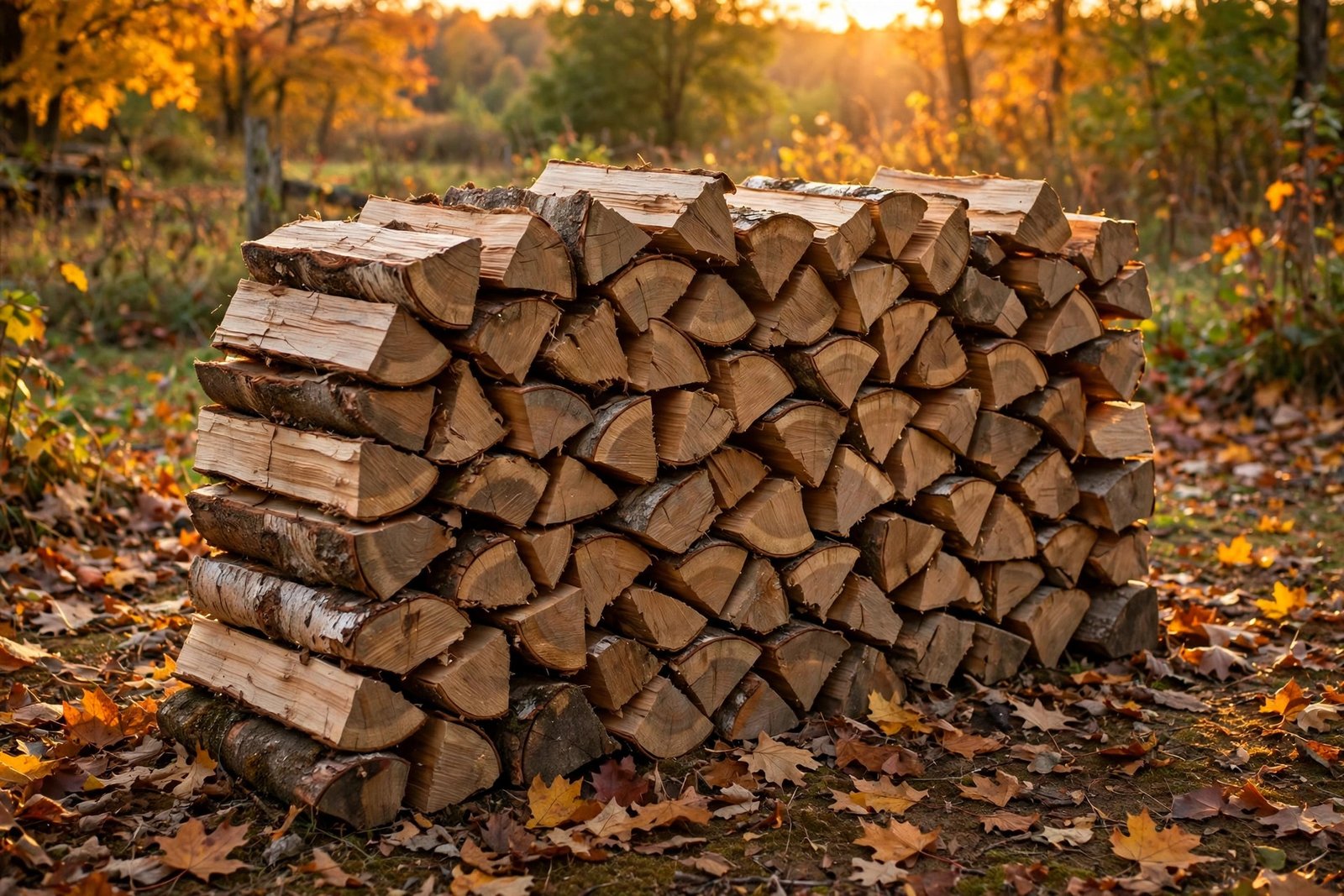
Washington Banned Untreated Firewood Imports in 2026
In February 2026, Washington’s legislature adopted an exterior firewood quarantine, effective August 18. From that date on, untreated firewood from outside the state can’t be brought in for sale or use — with civil penalties of up to $5,000 per violation.
The timing wasn’t random. The emerald ash borer was detected in Washington for the first time in summer 2026, near Vancouver — and by mid-October it had shown up near Walla Walla too, as Capital Press reported.
Washington’s rule names the threats it wants to keep out: emerald ash borer, spongy moth, Asian longhorned beetle, pinewood nematode, and spotted lanternfly. The only way in for out-of-state wood now is certified heat treatment — a core temperature of 160°F (71°C) held for at least 60 minutes — plus labeling that shows its source. You can read the state’s account of the quarantine and the Walla Walla detection for the full timeline.
The Two Pests Every Illinois Firewood Buyer Should Know
Emerald ash borer: the beetle that emptied whole streets
The emerald ash borer is a metallic green beetle about half an inch long — and the damage comes from its larvae, which feed under the bark and cut off the tree’s water and nutrients.
Infested ash trees usually die within two to five years. Look for D-shaped exit holes an eighth of an inch wide and S-shaped tunnels under the bark. The borer has killed more than 100 million U.S. ash trees in two decades.
Here’s the part that matters for your woodpile: the larvae live inside the wood. Cut an infested ash in the fall, split it, stack it — the larvae can still be alive in there months later. Come spring, adult beetles chew their way out and fly to the nearest living ash — maybe along Grandview Drive or the Rock Island Trail.
Illinois learned this the hard way. When EAB first showed up here — Kane and Cook counties, back in 2006 — firewood moved from infested areas was one of the main ways it arrived. University of Illinois entomologists were already warning people to buy firewood locally.
Spotted lanternfly: the hitchhiker with the mud-like eggs
The spotted lanternfly is a different problem: about an inch long, with spotted tan wings that flash red underneath. It feeds on the sap of more than 70 plants — maples, walnuts, grapevines, and its favorite, tree-of-heaven.
Unlike the borer, it doesn’t tunnel into wood. The female lays egg masses on almost any outdoor surface — bark, fence posts, patio furniture, trailer frames, firewood. Each mass looks like a smear of dried mud, grayish and about an inch long. Easy to miss on rough bark.
Fall is egg-laying season — which is why this matters in October. A mass laid on a log in September can ride a hundred miles in a truck bed, sit through winter, and hatch in spring onto trees that never had lanternflies. USDA inspectors list firewood, vehicles, and trailers among the pest’s most common rides.
Coverage of the lanternfly’s spread this past August — from Fox Weather and USDA alike — kept coming back to the same warning: check what you’re hauling.
How a Pest Actually Makes the Trip
Picture it: a homeowner cuts a dead ash in October and splits it for the fireplace, larvae already under the bark. The woodpile sits all winter. In May, adult beetles chew out and lift off toward the nearest ash trees — maybe in Bradley Park, maybe along the Illinois River bluffs.
Now the lanternfly version: a seller splits maple in late September, a female lays egg masses on a few logs, and you haul a face cord home to 61615. The eggs overwinter on the bark. In spring, nymphs hatch onto your yard — and your neighbor’s.
Neither pest flew to its new home — both got a ride. People do the traveling; the insects come along for free.
Which Pests Can Ride Along in Firewood
EAB and the lanternfly get the headlines, but they’re not traveling alone. Here’s the lineup firewood is known to carry:
| Pest | How it rides along | What it attacks |
|---|---|---|
| Emerald ash borer | Larvae tunnel under the bark of ash firewood; adults emerge in spring | All true ash trees |
| Spotted lanternfly | Egg masses stuck on bark or cut ends; hatch wherever the wood lands | 70+ plants: maple, walnut, grapevines, tree-of-heaven |
| Spongy moth | Egg masses laid on bark and other outdoor surfaces | Oaks and hundreds of other hardwoods |
| Asian longhorned beetle | Larvae develop inside hardwood logs | Maple, elm, birch, willow, poplar |
| Thousand cankers disease | Tiny walnut twig beetle and its fungus hide in walnut bark | Black walnut |
| Oak wilt | Fungus in fresh-cut oak; beetles carry spores to new wounds | Oaks, especially red oaks |
The Buy Local, Burn Local Rule
The guidance from USDA and Illinois DNR boils down to four words: buy local, burn local. Get firewood near where you’ll burn it, burn it there, and don’t haul leftovers elsewhere.
USDA’s long-standing rule of thumb: don’t move firewood more than about 50 miles from where it was cut. Illinois DNR’s version is blunter — over 50 miles, leave it home.
Around Peoria — 61604, 61615, 61616, out through Woodford County’s 61548 and 61554 — staying inside 50 miles is easy. The temptation is the bargain load from three counties away, or “free wood” from two hours north. That’s exactly the wood to skip.
How to Buy Firewood the Smart Way This Fall
A few habits separate a safe woodpile from a risky one:
- Ask where the wood was cut. A reputable seller knows — and the answer is nearby.
- Buy seasoned, split wood. Six to twelve months of drying burns cleaner and hotter.
- For trips and campsites, buy certified heat-treated bundles at or near your destination.
- Stack it off the ground on pallets, top covered, sides open for airflow.
- Glance at the bark: D-shaped holes in ash, mud-like egg masses, or heavy sawdust are red flags.
- Never bring leftover firewood home from a camping trip. Burn it there.
Does Seasoning Firewood Kill the Pests?
Seasoning — drying split wood for six to twelve months — makes genuinely better firewood: it lights easier, burns hotter, and smokes less. But it isn’t pest control. EAB larvae can survive inside cut wood, and lanternfly egg masses are built to survive winter. Dry wood is still a ride.
The one method that reliably kills what’s inside is certified heat treatment: holding the wood’s core at 160°F (71°C) for at least 60 minutes. That’s the standard Washington now requires, and it’s what the certification stamp on bundled firewood means. Per USDA’s guidance on pests hiding in firewood, the insects keep developing inside the wood all winter and emerge in spring.
What Illinois Expects From Firewood Buyers
Illinois DNR’s message is the same: buy local, burn local. Don’t haul firewood more than about 50 miles, and don’t bring wood in from another state unless it’s certified heat-treated. Many campgrounds have their own rules too — some don’t allow outside wood at all — so call ahead before you load the truck.
Keep an eye on quarantine notices, too. Parts of northern Illinois have faced spongy moth quarantines restricting firewood movement out of affected counties — rules change as pests move.
Had a Tree Taken Down? Your Yard Can Be Your Woodpile
The safest firewood of all never traveled. The June 2024 derecho dropped a lot of trees around Peoria, leaving plenty of homeowners with trunks and limbs they didn’t ask for.
After a removal, trunk wood can be cut to firewood length and split for the fireplace — zero miles traveled. Here’s what happens to a tree after it’s removed, from trunk to last branch.
The leftover tangle of limbs is a different job. Branch piles sitting all winter are exactly what pests and rot love —
which is where professional brush clearing earns its keep.
Protecting the Ash Trees You Still Have
If you’ve got healthy ash trees — and plenty of Peoria streets still do — they’re worth a conversation before EAB finds them. Professional emerald ash borer treatment options exist for trees still in good shape, and catching an infestation early makes all the difference.
For removals, storm cleanup, or questions about a suspect ash, reach us at https://treeremovalpeoriail.com/ or call below — we’re local, at 114 W Forrest Hill Ave right here in 61604.
Related Articles
- Spotted Lanternfly and Spongy Moth in Illinois: The Fall Egg-Mass Check
- Emerald Ash Borer Signs in Peoria IL | Save Your Ash Tree
- 20 Years After Emerald Ash Borer: The Surprising Science of Ash Recovery
Frequently Asked Questions
Don’t — burn it where you bought it. Hauling unused wood home is one of the easiest ways to move pests into your neighborhood.
How far is too far to move firewood?About 50 miles from where it was cut. Illinois DNR’s guidance is simpler: buy local, burn local — and don’t bring wood in from another state unless it’s certified heat-treated.
Does seasoning firewood kill emerald ash borer?Not reliably — EAB larvae can survive inside cut wood for months. Certified heat treatment (160°F core for 60 minutes) is the standard that kills them.
What do spotted lanternfly egg masses look like?Like a smear of dried mud — grayish, about an inch long, often on bark or fence posts. Scrape it into a bag with rubbing alcohol and report it to the Illinois Department of Agriculture.
Can I burn firewood from a tree removed from my own yard?Yes — it’s the safest wood you can burn, since it traveled zero miles. After a removal, trunk wood can be cut to firewood length for next season.
What should I do if I spot a spotted lanternfly in the Peoria area?Photograph it, note the location, and report it to the Illinois Department of Agriculture — and don’t move suspect wood or outdoor items off your property.
Peoria Tree Removal Co. — 114 W Forrest Hill Ave, Peoria, IL 61604 — (309) 250-8333 — treeremovalpeoriail.com — info@treeremovalpeoriail.com
2 Responses