
Tree Removal in Metamora, IL
Safe, affordable tree removal, trimming, stump grinding, and 24/7 emergency service for Metamora, IL 61548 — from the historic town square to ranch homes and farmsteads countywide.
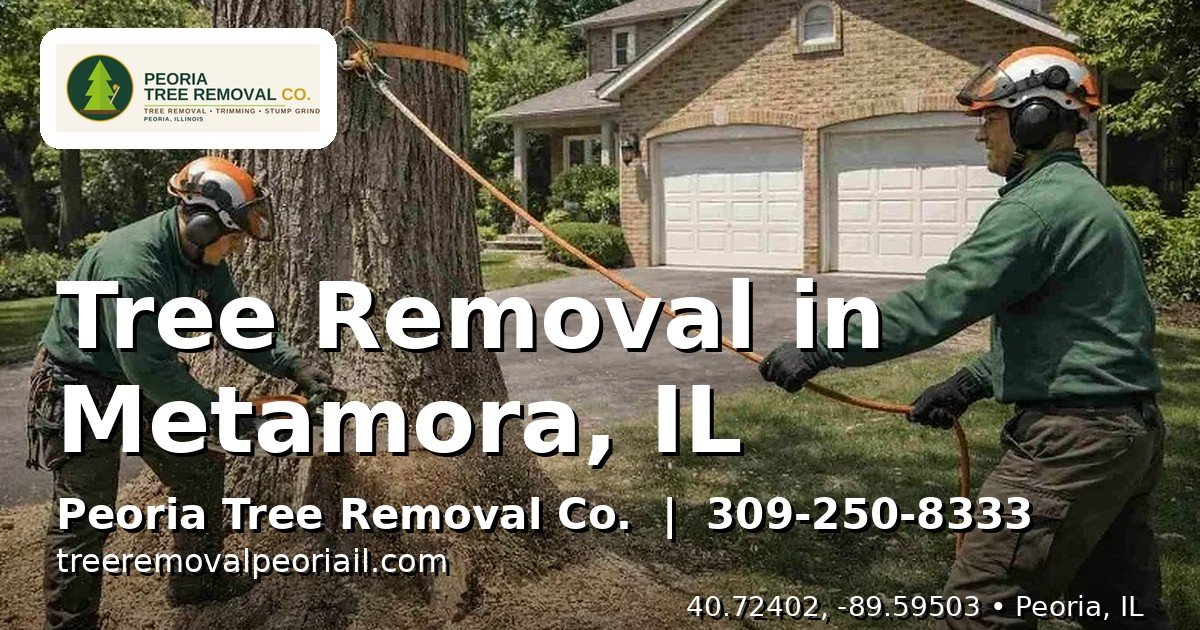
How much does tree removal cost in Metamora, IL? Most residential tree removals in Metamora run $450–$1,900, averaging around $850. Heritage-size oaks and maples near the historic district cost more due to careful sectional work. Free on-site estimates give you the exact price before any work begins.
Quick Facts: Tree Service in Metamora, IL 61548
- Average removal cost: $450–$1,900 (heritage trees higher)
- Typical timeline: Most residential jobs done in one day; emergency response 24/7
- Permit needed? No village permit typically required for private property — we verify every job
- Historic district note: Mature street and yard trees near the square need careful, preservation-minded work
- Storm risk: USDA zone 6a; first frost Oct 11–20; ice storms and the June 2024 derecho hit Woodford County hard
- Free estimates: Yes — every job, no obligation
Tree Work in a Town That Takes Its Trees Seriously
Metamora is the kind of town where roots run deep — literally and figuratively. Settled in the early 1800s (originally called Hanover), it served as the Woodford County seat until 1896. Abraham Lincoln practiced law in the 1845 courthouse on the town square, one of only two surviving Illinois courthouses where he worked. Families here trace their lineage back generations, and the trees tell the same story: massive oaks, sugar maples, and black walnuts that were saplings when Lincoln rode the Eighth Judicial Circuit.
That heritage changes how we work. A 120-year-old oak overhanging a pre-Civil War home near the square doesn’t get the same treatment as a volunteer elm behind a pole barn. The big old trees get preservation-first assessments — cabling, crown reduction, deadwood removal — and removal only when the tree is genuinely beyond saving or poses a real hazard. About 3,600 people live in the village now, in everything from historic homes downtown to ranch-style houses in the mid-century neighborhoods to newer builds on the edges, plus the farmsteads scattered through the surrounding township.
We’ve worked the whole range: storm-damaged limbs over Madison Street, a hollow silver maple threatening a garage off Chatham Street, fencerow clearing on acreage outside town, and careful crown work on heritage oaks where the homeowner’s biggest fear was losing the tree, not the cost.
The Metamora Tree Mix
Walk the older streets and you’ll see the classic Central Illinois canopy: bur oaks and white oaks, sugar and silver maples, black walnuts, honey locusts, and ash trees — many of the ash now dead or dying from emerald ash borer. Out toward Black Partridge Park’s 450 acres, the forest is the real thing: mature oak-hickory woods with 8 miles of trails winding through them. The village’s trees and the park’s woods share the same pests, the same storms, and the same clay-heavy Woodford County soil.
Tree Removal in Metamora: Real Prices
Here’s what tree work actually costs in this area — no vague “call for pricing” games:
| Tree size | Typical price range | What’s included |
|---|---|---|
| Small (under 25 ft) | $250–$500 | Cut, haul, cleanup |
| Medium (25–60 ft) | $450–$1,100 | Cut, haul, cleanup |
| Large (60–90 ft) | $900–$1,900 | Sectional takedown, haul, cleanup |
| Heritage / extra-large | $1,500–$3,500+ | Crane assist, rigging, full crew |
| Stump grinding (add-on) | $100–$350 | Grind 6–12″ below grade |
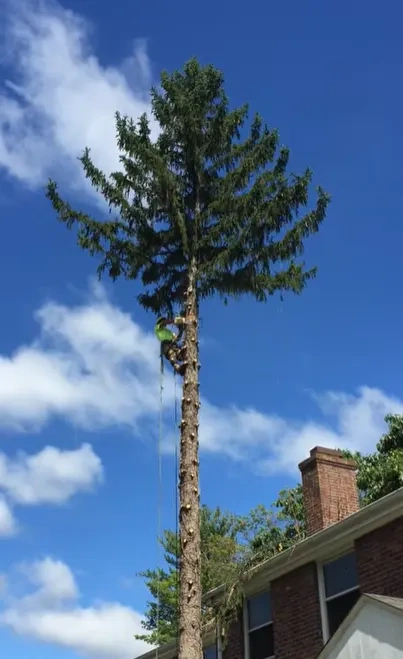
Heritage trees cost more to remove, and they should — a 36-inch oak six feet from a 150-year-old house gets taken down in small sections, every piece roped and lowered, with ground crew protecting the landscaping. That’s a full-day job for a skilled crew, not a morning’s work with a ladder and a hope.
The ash borer tax. Metamora’s ash trees are in rough shape. Emerald ash borer has killed thousands of ash across Central Illinois, and a dead ash is one of the most dangerous trees to remove — the wood goes brittle and unpredictable, snapping without warning. Dead ash removals run 20–30% higher than the same-size live tree because of the extra rigging and caution required. If you have a dying ash, don’t wait until it’s fully dead. It’s cheaper and safer to take it down while there’s still some structural integrity left.
Trimming and Pruning: Keeping the Old Trees Standing
In a historic town, pruning is preservation. The goal is to keep these big old trees safe and healthy for another generation, not to butcher them into lollipops.
Crown cleaning — removing dead, diseased, and crossing branches — is the single most valuable thing you can do for a mature oak or maple. Every 3–5 years, $400–$900 depending on size. It reduces storm breakage, improves airflow (which fights disease), and lets us spot problems early.
Crown reduction — carefully shortening the canopy when a tree has outgrown its space. This is skilled work; topping a tree (the old hack-it-flat approach) destroys it. Proper reduction follows the tree’s natural structure and keeps it healthy.
Cabling and bracing — for heritage trees with weak branch unions or splits, steel cables and brace rods can add decades of safe life. We’ve cabled oaks in Metamora that will outlive all of us.
Clearance pruning — limbs over roofs, driveways, and sidewalks. The ranch-style neighborhoods have a lot of mature maples planted in the ’60s and ’70s that are now crowding houses. A good clearance trim runs $200–$600.
Timing in zone 6a: prune oaks in the cold months (November–March) to avoid oak wilt. Most other shade trees are best pruned dormant, February–March. And if you’re near the historic district, remember that spring and early summer bring the beetles that spread oak wilt — never leave fresh oak wounds open then.
🌳 Saving vs. Removing: Our Honest Framework
We try to SAVE it when: the tree is structurally sound, the disease is treatable, pruning or cabling solves the hazard, or it’s a heritage tree worth the investment.
We recommend REMOVAL when: more than 50% of the canopy is dead, the trunk is hollow or split, roots are severely damaged, it’s a brittle dead ash, or it threatens people and structures with no safe fix.
About one in three “removal” calls ends with a pruning plan instead. We’d rather earn your trust than sell you a removal.
Stump Grinding in Metamora
The stump conversation happens on nearly every removal. Here’s the straight version: grinding takes the stump 6–12 inches below grade, the roots decay naturally, and you can mow, plant, or landscape right over it. Most stumps in town run $100–$350.
Full stump removal — excavating the entire root ball — is rarely needed. It makes sense if you’re pouring a foundation or driveway over the spot, or if a diseased tree’s roots need to come out of the soil. Otherwise, grinding is faster, cheaper, and less destructive to the surrounding yard.
One Metamora-specific note: the older properties often have multiple old stumps from trees removed decades ago, half-rotted and sprouting suckers. We can grind a whole batch in one visit — it’s far cheaper per stump than doing them one at a time.
For the complete comparison, read our guide to stump grinding and removal in the Peoria area.
24/7 Emergency Tree Service in Metamora
When the ice storms roll through Woodford County or a summer microburst hits, trees fail — and they don’t wait for business hours. Our emergency line is staffed around the clock.
If a tree just came down on your property:
- Stay clear — especially if power lines are involved (call the power company first for lines)
- Don’t cut it yourself — storm-loaded trees are under tension and injure homeowners every year
- Photograph the damage from a safe distance for insurance
- Call us — we triage by phone and dispatch
Our 24/7 emergency tree service covers Metamora and all of Woodford County. We handle the tree on the house, the tree blocking the driveway, and the hung-up limbs threatening to come down next.
Tree Health Assessments by Certified Arborists
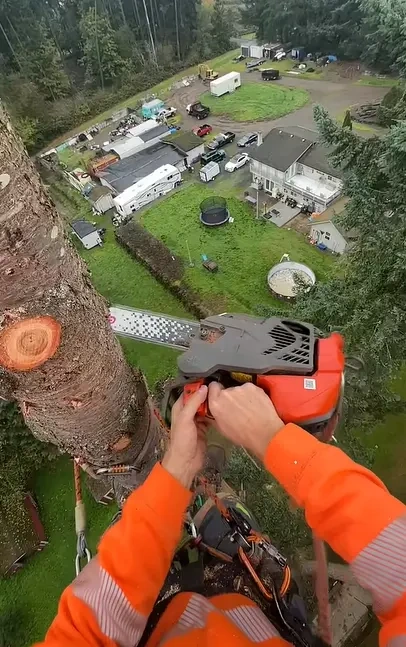
Before you decide a tree’s fate, get a professional read. Our experienced arborists assess the canopy, trunk, root flare, and soil, then tell you plainly whether the tree can be saved or needs to come down.
What we’re seeing in Metamora right now:
- Emerald ash borer — the ash trees are dying across town. Early treatment works; late treatment doesn’t. Know which stage yours are in.
- Oak wilt — a real threat to the heritage oaks. Prevention (proper pruning timing, avoiding wounds in spring) beats treatment.
- Anthracnose and leaf diseases — common on sycamores and maples after wet springs. Usually cosmetic, but we check.
- Root damage from construction — driveway replacements, additions, and utility work compact soil and sever roots. Decline shows up 2–4 years later.
A certified arborist’s tree health assessment is the cheapest insurance policy your trees can have.
Why Metamora Calls Peoria Tree Removal Co.
We’re 25 minutes away in Peoria, and Woodford County is home turf — not a far-flung service area we visit when it’s convenient.
- 17 years in business, licensed and insured, experienced arborists
- Preservation-first mindset — we save heritage trees whenever it’s safe to do so
- Free on-site estimates with firm, honest pricing
- Full cleanup — raked, blown, hauled, every time
- Storm-season readiness — when the derecho hit in June 2024, we were already working Woodford County
We also keep mature trees healthy with scheduled tree trimming and pruning — many of our Metamora customers are on a 3–5 year cycle that keeps their oaks and maples in top shape.
Frequently Asked Questions
There’s a huge old oak in my yard near the historic district. Can it be saved?
Often, yes. We’ve preserved century-old oaks with crown cleaning, cabling, and targeted pruning. It depends on the tree’s structural condition — a certified assessment tells us (and you) the truth. We only recommend removal when the tree can’t be made safe.
How do I know if my ash tree can be treated for emerald ash borer?
If the canopy is still mostly full (less than ~30% dieback) and the bark is largely intact, treatment is usually worth it. If the tree is mostly bare with bark sloughing off, it’s past saving. We give you an honest read — we don’t sell treatments, so there’s no upsell motive.
Do you work on properties outside the village, in the surrounding township?
Absolutely. About half our Metamora-area work is on acreages and farmsteads outside the village limits — fencerow clearing, windbreak management, barn-lot hazard trees. We bring the right equipment for open ground.
Will you work with my HOA or the village on approvals?
Yes. We provide written assessments with photos for HOA submissions, and we know the local requirements. Most private-property tree work in Metamora doesn’t need a village permit, but we confirm every time.
What happens to the wood?
Your choice. We can haul everything, leave firewood cut to length, or leave mulch chips. Most customers have us haul it — the quote includes full removal and cleanup.
Do you offer senior or multi-tree discounts?
Ask us. When we’re already on-site with the equipment, additional trees cost less per tree. Bundling a removal with a trim, or doing the whole street’s ash trees in one visit, saves real money.
Nearby Service Areas
From our Peoria base we serve all of Woodford County and beyond. Nearby towns with dedicated service pages: Washington, Morton, and Dunlap.
Get Your Free Estimate in Metamora
Whether it’s a heritage oak worth saving, a dead ash that needs to come down safely, or storm damage that can’t wait — one call gets you an honest assessment and a firm price.
Peoria Tree Removal Co.
114 W Forrest Hill Ave, Peoria, IL 61604
Phone: (309) 250-8333
Home
Hours: Mon–Sat 8am–6pm, with 24/7 emergency tree service
Peoria Tree Removal Co.
114 W Forrest Hill Ave, Peoria, IL 61604
Mon–Sat 8am–6pm · 24/7 emergency tree service