
Tree Risk Assessment in Peoria, IL
Is that leaning tree a real hazard — or just ugly? A professional tree risk assessment in Peoria, IL answers that question with evidence, not guesswork. Our arborist walks your property, examines every tree of concern, and gives you a written report with a clear verdict: monitor, prune, or remove.
Quick Facts: Tree Risk Assessment
- What it is: a systematic inspection of tree structure, health, and site conditions to estimate failure risk.
- Typical cost in Peoria: $150–$300 for a standard residential assessment; often credited toward the work if you hire us.
- How long it takes: 30–60 minutes for most properties; written report within 48 hours.
- Best for: leaning trees, trees near the house, post-storm damage, HOA disputes, and pre-purchase inspections.
- What you get: a written report with photos, risk ratings, and prioritized recommendations.
- When to call: any time — but especially after storms, before construction, or when a tree starts worrying you.
Most tree problems announce themselves months before anything falls. The crack in the trunk, the mushroom shelf at the base, the lean that wasn’t there last spring — a trained eye catches those. An assessment turns “I’m worried about that tree” into a plan with a price. Here’s exactly what happens when you call us.
What Gets Inspected in a Risk Assessment
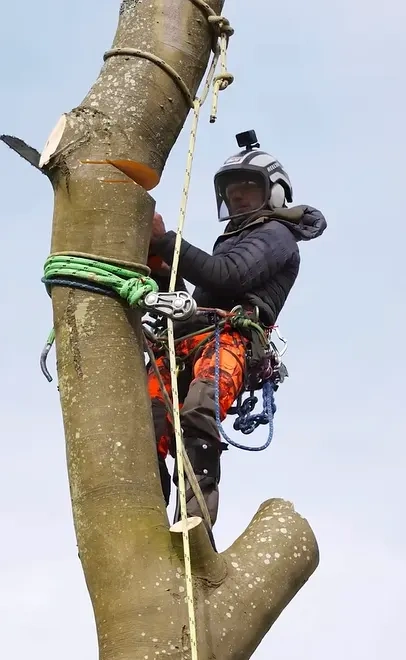
A real risk assessment isn’t a five-minute glance. It’s a methodical top-to-bottom inspection. Here’s what our arborist checks, in order:
- Root zone and soil: root flare exposure, girdling roots, heaving soil, mushrooms or conks at the base (decay indicators), recent grade changes or trenching nearby.
- Trunk: cracks, cavities, included bark, cankers, lightning scars, and the ratio of sound wood to decayed wood — tapped and probed, not just eyeballed.
- Canopy and branches: deadwood percentage, weak branch unions, overextended limbs, previous topping damage, and storm breakage patterns.
- Lean and movement: measured lean angle, soil lifting on the opposite side, and whether the lean is correcting (safer) or worsening (urgent).
- Site and targets: what’s underneath — house, driveway, power lines, play area — because risk is hazard times consequence. A leaning tree in an empty field is a low-priority curiosity. The same tree over a bedroom is a different conversation.
- Species and history: some species fail more often (silver maple, Bradford pear, cottonwood), and a tree’s history — past storms, construction damage, previous pruning — shapes its future.
Each finding gets photographed and noted. Nothing is “fine, trust me” — it’s all in the report.
Assessment Levels: What Fits Your Situation
Not every tree needs the full workup. Professional practice recognizes three levels — we match the level to your situation so you don’t pay for more than you need:
| Level | What it covers | Best for |
|---|---|---|
| Level 1 — Limited visual | Walk-around look at specific trees or a whole property from the ground | Quick check before a party, after a minor storm, “just tell me if anything’s scary” |
| Level 2 — Basic assessment | Detailed 360° inspection of individual trees, with tools (probe, mallet, binoculars) | Leaning trees, trees near structures, HOA letters, insurance questions |
| Level 3 — Advanced | Climbing inspection, root excavation, or decay-detection equipment | High-value heritage trees, legal disputes, trees where the verdict really matters |
Most Peoria homeowners need Level 2 — thorough enough to be trustworthy, affordable enough to actually do. We recommend the level during the visit, and the written report documents which one you got.
What Your Written Report Contains
You don’t get a handshake and a shrug. Every assessment comes with a written report — here’s what’s in it:
- Tree-by-tree findings: species, size, condition, and photos of every defect found.
- Risk ratings: each tree rated on likelihood of failure and consequence — the standard matrix professionals use.
- Prioritized recommendations: what’s urgent (do this month), what’s routine (this season), and what’s watch-list (recheck next year).
- Cost estimates: ballpark pricing for the recommended pruning or removal, so you can budget.
- Re-inspection timeline: when each tree should be looked at again — because trees change.
Reports go out within 48 hours of the visit. Bring them to your insurance agent, your HOA board, or the neighbor whose fence the tree leans toward — a documented professional opinion settles arguments that opinions alone can’t.
When Assessment Beats Removal (and When It Doesn’t)
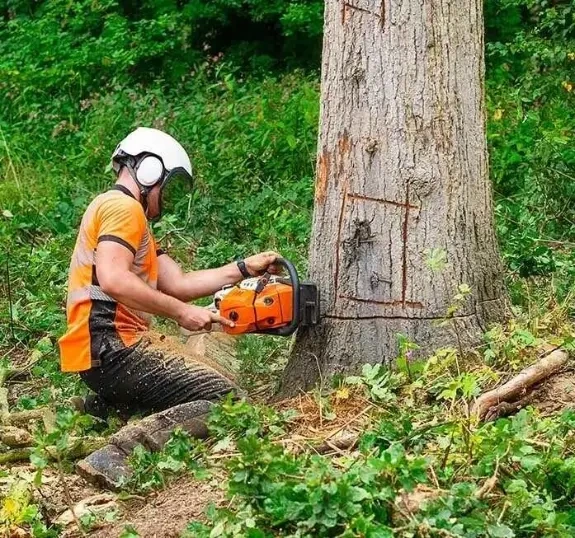
Here’s the part most tree companies won’t tell you: a lot of trees people want removed don’t need to come down. About a third of our “removal” calls turn into pruning jobs after the assessment. A mature shade tree adds real value to a Peoria home — removing a healthy one is throwing money away along with the shade.
An honest assessment protects you from both mistakes: paying to remove a tree that could have been saved, and keeping a tree that’s quietly becoming a hazard. We’ve talked homeowners out of removing perfectly good oaks — and we’ve flagged trees that looked fine from the driveway but had decayed trunks our probe found in thirty seconds.
The rule of thumb: if the tree’s structure is sound and the problem is weight, clearance, or deadwood, pruning usually wins. If the trunk is hollow, the roots are compromised, or the lean is getting worse, removal is the safe call. The assessment is how you know which one you’re dealing with.
Signs You Need an Assessment Soon
Call us for an assessment if you notice any of these — sooner is always cheaper than later:
- New or worsening lean — especially after a storm, or if soil is heaving on one side.
- Mushrooms or shelf fungi on the trunk or at the base — a sign of internal decay.
- Large dead branches in the upper canopy, or bark falling off in sheets.
- Cracks in the trunk — vertical cracks, frost cracks reopening, or seams that weep.
- Construction nearby — trenching, grading, or new driveways within the drip line damage roots you can’t see.
- It just worries you — honestly, that’s reason enough. Peace of mind has a price, and it’s a lot less than a new roof.
If the tree is actively failing — splitting apart, uprooting, hanging over a power line — skip the assessment and call our 24/7 emergency service instead.
Risk Assessment FAQs
How much does a tree risk assessment cost in Peoria?
A standard residential assessment runs $150–$300. If you hire us for the recommended work, we typically credit the assessment fee toward the job — so the diagnosis is effectively free.
Will the assessment tell me to remove the tree?
Only if removal is genuinely the safest option. About a third of our “removal” assessments turn into pruning jobs instead — we’d rather save a good tree than sell you a removal.
How long does the report take?
You’ll have the written report with photos within 48 hours of the visit. Need it faster for an insurance or HOA deadline? Tell us — we can usually rush it.
Can an assessment help with a neighbor dispute?
Yes. A documented professional opinion about a tree’s condition and risk settles arguments that back-and-forth opinions can’t. We’ve written reports used in insurance claims, HOA hearings, and property-line disagreements.
Do I need an assessment before construction or a new fence?
Strongly recommended. Trenching and grading damage roots you can’t see, and a pre-construction assessment documents the tree’s baseline condition — which protects you if damage shows up later.
What’s the difference between an assessment and a free estimate?
A free estimate prices a job you’ve already decided on. An assessment decides what the job should be — with measurements, photos, and a written risk rating. Different questions, different answers.
Stop Guessing About Your Tree
Every tree you’re worried about is either fine, fixable, or failing — and only an assessment tells you which. Call 309-250-8333 and we’ll come take a real look, measurements and all.
Peoria Tree Removal Co. — 114 W Forrest Hill Ave, Peoria, IL 61604. Mon–Sat 8am–6pm, 24/7 emergency tree service.
Peoria Tree Removal Co.
https://treeremovalpeoriail.com/
114 W Forrest Hill Ave, Peoria, IL 61604, USA
Tree Service Company