
That dead tree in your front yard is driving you crazy — but your HOA has opinions about it. HOA tree rules in Peoria determine what you can cut, what needs written approval, and what’ll get you a fine if you skip the paperwork. Here’s how to get your tree work approved fast, avoid the common violations, and keep the board happy.
Quick Facts: HOA Trees in Peoria
- Most HOAs require approval before removing any tree — even dead ones. Trimming rules vary.
- Typical approval time: 2–4 weeks; emergency removals can often proceed with after-the-fact notice.
- Common fines: $100–$500+ per unapproved removal, plus mandatory replacement planting.
- What boards want: a written request, photos, and often an arborist’s assessment or removal quote.
- Street trees: usually HOA or city property — you may not be allowed to touch them at all.
- Deadlines matter: some HOAs require stumps ground and replanting within 30–60 days.
We’ve worked with HOA boards all over Peoria — Dunlap subdivisions, 61614 neighborhoods, Washington communities. The pattern is always the same: homeowners who ask first get approved fast. Homeowners who cut first get fined. This guide walks you through the approval process so your tree work goes smoothly.
What Typically Needs HOA Approval
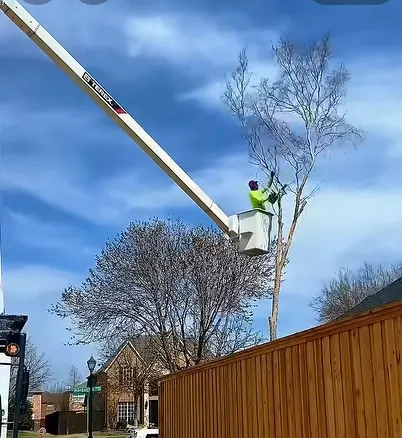
Every HOA’s CC&Rs (Covenants, Conditions & Restrictions) are different, but the tree rules usually cover:
- Full tree removal: almost always requires written approval — even for dead or hazardous trees. Some HOAs fast-track dead-tree removals; others don’t.
- Major trimming: crown reductions, topping (which you shouldn’t do anyway), or removing more than 25% of the canopy typically need approval. Routine deadwood pruning usually doesn’t.
- Stump grinding and replanting: many HOAs require the stump gone and a replacement tree planted within 30–60 days — sometimes a specific species from an approved list.
- Street and common-area trees: these usually belong to the HOA, not you. Report problems to the board; don’t hire your own crew for HOA-owned trees.
- View trees: some communities protect specific trees for sightlines. Removing one can trigger neighbor disputes on top of board fines.
When in doubt, ask. A quick email to the board or management company beats a $500 fine every time.
How to Get Your Tree Work Approved Fast
Boards approve complete applications fast and incomplete ones never. Here’s the package that gets yeses:
- 1. Read your CC&Rs first. Find the tree/landscaping section. Note the approval form, the submission deadline, and any species lists.
- 2. Get a written quote from us. Our free estimates include a written scope — what we’re removing or trimming, why, and the price. Boards love documentation.
- 3. Add photos. Take clear photos of the tree, the problem (dead top, lean, root damage), and what’s underneath it. Visual evidence speeds approvals dramatically.
- 4. Include an arborist assessment if it’s contested. If the board questions whether the tree really needs to go, our tree risk assessment report settles it — documented condition, risk rating, recommendation.
- 5. Submit before the board meeting. Most boards meet monthly. Miss the submission deadline and you wait another month. Ask the management company for the calendar.
- 6. Propose the replacement. Offering to plant an approved species immediately removes the board’s biggest objection. We can suggest species from your HOA’s list.
Emergency? A tree that’s actively failing — splitting, uprooted, on a structure — usually qualifies for emergency action with after-the-fact notice. Document everything with photos and call our 24/7 emergency service.
Common HOA Tree Violations (and Their Fines)
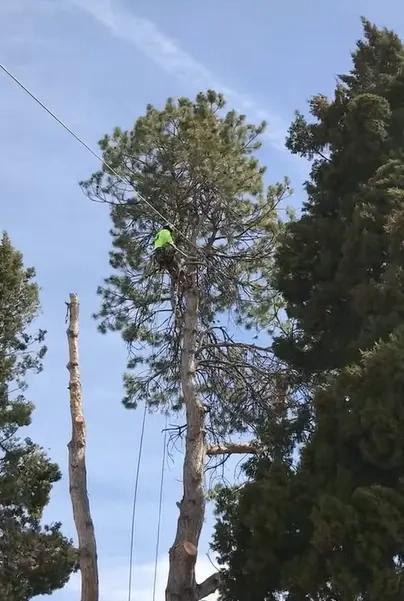
These are the violations we see most in Peoria-area HOAs — and what they typically cost:
| Violation | Typical consequence | How to avoid it |
|---|---|---|
| Removing a tree without approval | $100–$500 fine + mandatory replacement | Submit the request first — even for dead trees |
| Topping or butchering a tree | Fine + order to remediate or replace | Hire pros who prune properly — topping is never the answer |
| Leaving a stump too long | Violation notice + deadline, then fines | Schedule grinding with the removal — one job, done |
| Planting an unapproved species | Order to remove and replant | Check the approved list before buying anything |
| Touching HOA-owned trees | Fine + liability for any damage | Report to the board; let them handle their trees |
The most expensive violation is always the unapproved removal. Boards can — and do — require you to plant a mature replacement tree, which costs far more than the fine.
How We Help With HOA Approvals
We’ve been through the HOA approval process hundreds of times across Peoria, Dunlap, Washington, and Morton. Here’s what we do to make it painless:
- Written estimates with scope: every free estimate includes a written description of the work — exactly what boards want attached to the request.
- Photos and documentation: we photograph the tree’s condition during the estimate — dead tops, cracks, lean — so your application has visual evidence.
- Risk assessment reports: when a board questions the need, our tree risk assessment gives them a professional documented opinion.
- HOA-friendly scheduling: we work within board timelines and can schedule the work for right after approval comes through.
- Replacement planting: if your HOA requires a new tree, we plant it — species from the approved list, planted correctly in Peoria clay.
The HOA Approval Checklist
📄
Read the CC&Rs
Find the tree and landscaping rules before you do anything.
📸
Document the problem
Photos of the tree, the defect, and what’s at risk underneath.
📝
Get our written quote
Scope, price, and timeline — free with every estimate.
✅
Submit before the meeting
Hit the board’s deadline or wait another month.
Related Articles
- Tree Removal for Landlords & Rental Properties in Peoria
- Illinois Tree Law: Neighbor Disputes Explained
- Do I Need a Permit to Cut Down or Remove a Tree in Peoria, IL or Surrounding Municipalities?
HOA Tree FAQs
Can my HOA stop me from removing a dead tree?
They can require approval first, but no reasonable board denies a dead-tree removal with documentation. Get our written estimate with photos, submit it, and approval is usually fast.
What if the tree is an emergency — it’s splitting right now?
Act first, document everything. Emergency removals to protect life and property almost always qualify for after-the-fact notice. Take photos before, during, and after, and notify the board within 24–48 hours.
Who pays for tree work on common areas?
The HOA does — that’s what dues are for. Don’t hire your own crew for common-area or street trees; report the issue to the board in writing.
Can the HOA make me plant a specific tree?
Yes, if the CC&Rs include an approved species list. Many Peoria-area HOAs do. Check the list before buying — planting the wrong species means doing it twice.
What if my neighbor’s tree is damaging my property?
Talk to the neighbor first, then the board if it’s a common-area tree. Our risk assessment report documents the damage and the risk — useful evidence if it escalates.
Do I need approval to trim branches hanging over my fence?
Usually you can trim branches that cross onto your property up to the property line — that’s Illinois common law. But check your CC&Rs first; some HOAs still want notice for major trimming.
Get Approved, Then Get It Done
Don’t let HOA paperwork delay a tree that needs attention. Call 309-250-8333 for a free estimate — we’ll give you the written quote, photos, and documentation your board needs to say yes fast.
Peoria Tree Removal Co. — 114 W Forrest Hill Ave, Peoria, IL 61604. Mon–Sat 8am–6pm, 24/7 emergency tree service.
Peoria Tree Removal Co.
https://treeremovalpeoriail.com/
114 W Forrest Hill Ave, Peoria, IL 61604, USA
Tree Service Company
One Response