

Every spring, central Illinois gets its annual reminder that trees and thunderstorms are a dangerous combination. The June 2024 derecho tore through Peoria County with 100-mph winds, and the lesson was clear: the trees that failed were mostly the ones nobody had looked at in years. This storm-season tree prep checklist for Peoria will help you find your risks before the next big wind event does.
Quick Facts: Storm Prep in Peoria
- Storm season: April–September; peak severe weather May–July in central Illinois.
- Biggest risk: dead or weakened limbs over houses, cars, and power lines.
- Prep window: late winter through early spring — before leaves hide the defects.
- Key actions: remove deadwood, reduce sail effect on dense canopies, check root zones after heavy rain.
- Cost of prep: $200–$600 pruning per tree vs. $1,500–$4,500 emergency removal after failure.
- Insurance note: documented maintenance strengthens claims; neglected trees weaken them.
Storm prep isn’t about making your trees stormproof — nothing is. It’s about removing the failures waiting to happen: the dead ash that’s been standing for two years, the cracked limb over the driveway, the root plate loosened by last month’s floods. Here’s the full checklist.
The Pre-Storm Inspection: What to Look For
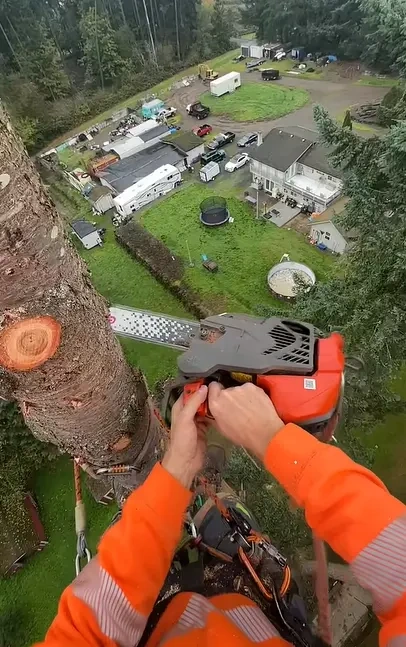
Walk your property in early spring — before leaves fill in and hide the structure. Look for:
- Deadwood: branches with no buds, bark peeling off, gray and brittle. Dead limbs are the #1 thing storms throw at houses.
- Cracks and splits: vertical cracks in trunks, V-shaped unions with included bark, old pruning wounds that never closed.
- Lean changes: any tree leaning more than it did last year, or soil heaving on one side of the base.
- Root problems: mushrooms at the base, soil erosion exposing roots, recent trenching or construction within the drip line.
- Previous storm damage: hanging broken limbs (“widowmakers”), torn branch stubs, lightning scars — old damage is where new failures start.
- Targets: note what’s under each risky tree — house, garage, car, power line, play area. Risk = hazard × target.
Found something worrying? Our tree risk assessment gives you a professional verdict with photos and a written report.
Pruning That Actually Prevents Storm Damage
Not all pruning helps in storms. Here’s what works — and what’s a waste of money:
- Deadwood removal: the single highest-value storm prep. Dead branches are what break first, every time.
- Crown cleaning: removing crossing, rubbing, and weakly attached branches reduces the number of failure points.
- Weight reduction: shortening overextended limbs (not topping — never topping) reduces the leverage wind has on the tree.
- Clearance pruning: limbs over roofs, driveways, and power lines get cut back to safe distances.
- What DOESN’T help: “hurricane pruning” (stripping interior branches), topping, or lion-tailing. These weaken the tree and increase wind damage.
Timing matters: prune in late winter or early spring while the tree is dormant and defects are visible. Details on our trimming and pruning page.
Yard Prep: The 48-Hour Storm Checklist
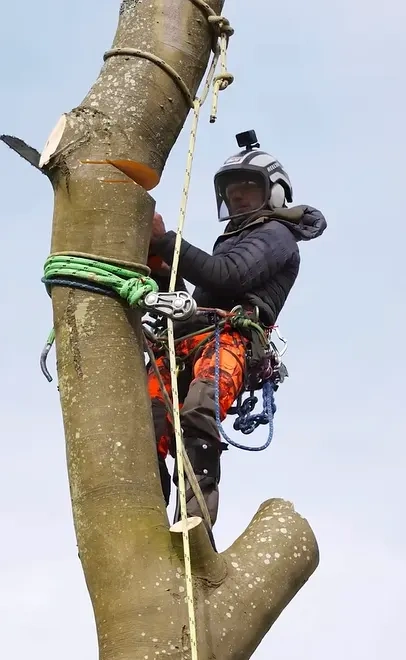
Severe weather’s on the radar. Here’s what to do in the two days before it hits:
| When | Do this | Why |
|---|---|---|
| 48 hours out | Walk the property; note dead limbs, leaning trees, loose branches already on the ground | Know your risks before the wind finds them |
| 24 hours out | Secure patio furniture, grills, trampolines; park cars away from risky trees | Flying objects cause more damage than falling limbs |
| 12 hours out | Charge phones; know where flashlights are; clear gutters if safe to do so | Power outages are the most common storm impact |
| During | Stay inside, away from windows; never go out to “check” during high wind | Most storm injuries happen to people outside during the event |
| After | Inspect from the ground; photograph damage; call us before touching anything near power lines | Downed lines kill — assume every wire is live |
After the Storm: What to Do First
The wind’s gone. Now what? Priority order:
- 1. Stay away from downed lines. Call Ameren first, then us. Never touch a tree touching a wire.
- 2. Photograph everything. Damage photos before cleanup — your insurance adjuster needs them.
- 3. Check for hangers. Broken limbs hung up in canopies (“widowmakers”) are the most dangerous post-storm hazard. Don’t walk under them.
- 4. Call us for the urgent stuff. Trees on houses, blocked driveways, hanging limbs — our 24/7 emergency service handles storm damage around the clock.
- 5. Don’t rush the rest. Cosmetic damage can wait a week. Structural damage can’t. We’ll help you triage.
Storm Prep Priority Order
🪓
Remove deadwood
Dead limbs fail first — get them down before wind does.
✂️
Prune weak unions
V-shaped crotches and crossing limbs are failure points.
🏠
Clear the targets
Limbs over roofs, driveways, and wires get priority.
📸
Document it all
Photos before and after — for insurance and peace of mind.
Related Articles
- After This Week’s October Storms: What to Check on Your Trees in Peoria IL
- Storm-Damaged Tree in Peoria, IL: Can It Be Saved or Must It Go?
- 7 Benefits of Tree Pruning for Peoria Homeowners
Storm Prep FAQs
When is storm season in Peoria?
Severe weather season runs April through September, with peak tornado and straight-line wind risk May through July. But ice storms in winter and early-spring wind events cause plenty of tree damage too — prep is really year-round.
How much does storm-prep pruning cost?
Typically $200–$600 per tree for deadwood removal and crown cleaning in Peoria. Compare that to $1,500–$4,500 for an emergency removal after the tree fails — prep pays for itself many times over.
Will my insurance cover tree damage?
Usually for damage to structures, with limits on debris removal (often $500–$1,000). Documented maintenance — our reports and photos — strengthens your claim significantly. Check your policy’s tree and debris provisions.
Should I do anything special for newly planted trees?
Yes — stake them properly for the first growing season and mulch well. Young trees with small root systems are the most likely to blow over in their first two years.
What trees are most storm-resistant in Peoria?
Bur oak, swamp white oak, hackberry, and Kentucky coffeetree handle wind well. Bradford pears, silver maples, and cottonwoods are the usual casualties — see our replacement tree guide.
Can you help after hours if a storm hits at night?
Yes — our 24/7 emergency service runs around the clock during storm events. Trees on houses and blocked driveways get priority.
Don’t Wait for the Next Derecho
The June 2024 derecho taught Peoria a lesson nobody wanted to learn twice. Get your trees inspected and prepped before the next storm season — call 309-250-8333 for a free estimate.
Peoria Tree Removal Co. — 114 W Forrest Hill Ave, Peoria, IL 61604. Mon–Sat 8am–6pm, 24/7 emergency tree service.
Peoria Tree Removal Co.
https://treeremovalpeoriail.com/
114 W Forrest Hill Ave, Peoria, IL 61604, USA
Tree Service Company
4 Responses