
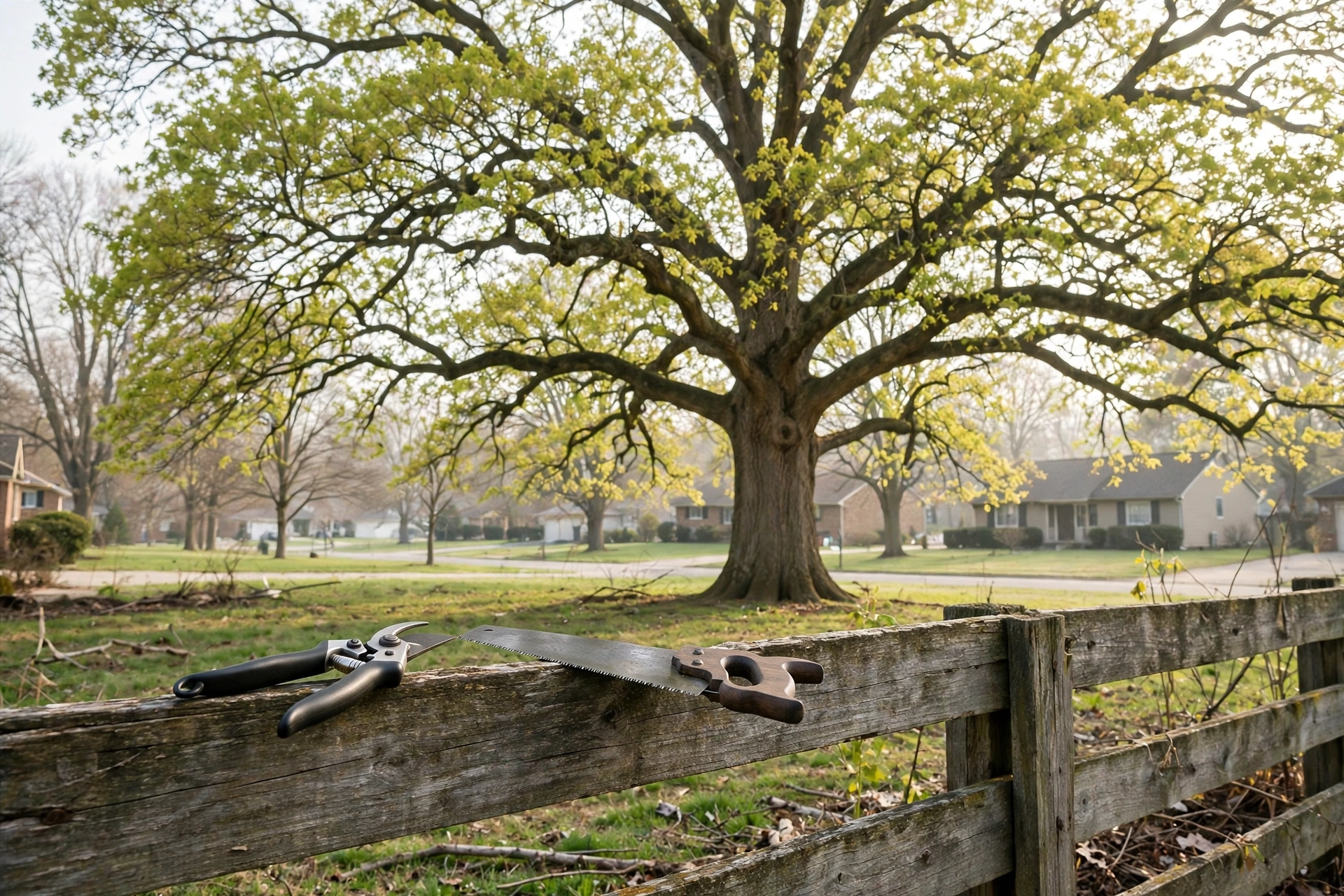
Skip the shears when oaks are in oak-wilt season (April through October), when it’s fall, during heat waves or drought, when branches are ice-loaded, or right after planting. Prune most Central Illinois trees in late winter dormancy instead — roughly November through March.
That’s the short answer. Here’s the longer one, from a crew that spends every spring talking Peoria homeowners out of well-meaning pruning done at exactly the wrong time.
Quick Facts: When NOT to Trim Trees (Central Illinois)
- Oak wilt danger months: April–October — never prune oaks then
- Safest pruning window: November–March, while trees are fully dormant
- Worst time to prune: fall — fungal spores are everywhere and wounds heal slowly
- Ice-loaded branches: never cut them — wait for the thaw
- Newly planted trees: hands off for the first full growing season
- USDA zone 6a: first frost usually lands October 11–20
- Rule of thumb: when in doubt, wait — a skipped year never killed a tree
Every April, the calls start — someone in the 61615 wants their pin oak “cleaned up” before a party. We tell them the same thing every year: put the loppers down until November. An oak pruned in May can catch oak wilt from a beetle smaller than a grain of rice, and a red oak can die within weeks. Pruning isn’t just about what you cut, it’s about when — here’s when not to trim trees in Central Illinois.
Why Timing Beats Technique Every Time
Trees don’t heal like skin heals. They can’t regrow damaged tissue — they wall it off, growing new wood over and around the wound. That sealing process is what timing is all about.
In late winter, the setup favors the tree: energy is banked in the roots and trunk, sap isn’t flowing hard, and the insects and fungal spores that cause trouble are mostly inactive. A February cut sits clean until spring growth seals it fast.
Cut in fall and the wound stays open for months while the tree sleeps — spores land, moisture gets in, decay gets a head start. Cut an oak in May and sap beetles can find the fresh wound within hours.
Then there’s the food problem: leaves are the tree’s kitchen. Pruning during a heat wave or drought rips away the kitchen when the tree needs it most. Good technique matters — clean cuts at the branch collar, sharp tools — but perfect technique at the wrong time does more harm than sloppy technique at the right time. The calendar matters more than the cut.
Oaks: The April-to-October Rule You Can’t Break
Here’s the one rule to remember: do not prune oak trees in Illinois between April and October. This isn’t a preference — it’s disease prevention.
Oak wilt is a fungus that plugs the tree’s water vessels. Red oaks — pin, red, black — can die within weeks of infection; white oaks and bur oaks hold out longer but still lose. It spreads through tiny sap beetles: they feed on fungal mats under the bark of dead infected oaks, then fly to the nearest fresh wound and deliver the spores. Any fresh oak cut from April through October is a landing pad.
Peoria’s older neighborhoods — Glen Oak, Moss-Bradley, the Grandview Drive corridor — are full of mature oaks that have stood sixty years. We’ve watched a June-pruned red oak wilt by August and die by fall.
Prune oaks November through March, when beetles are inactive. Five months is plenty of time.
Storm damage in July is the one exception: cut back to sound wood and paint the wound immediately with plain latex paint. It won’t cure anything, but it makes the wound less inviting to beetles. Then call an ISA Certified Arborist — summer storm damage on oaks deserves a professional eye. Our tree disease treatment guide covers what to watch for afterward.
Every April we turn down oak-pruning jobs. People get frustrated — until we show them oak wilt photos. Then it’s always the same: “Nobody told me.” The ISA’s TreesAreGood.org has the full science.
Fall Pruning: The Mistake That Waits All Winter
October feels like pruning season — leaves dropping, yard visible, a free Saturday. Resist it. Fall is the worst time to prune in Central Illinois.
Three things go wrong at once. Fungal spores peak in autumn, drifting everywhere looking for fresh wounds. The tree is shutting down, so wounds stay open for months instead of sealing. And fall moisture plus freeze-thaw cycles work into those open cuts all winter while decay gets established.
In zone 6a our first frost usually lands October 11–20, but a few cold nights don’t mean dormancy. True dormancy doesn’t settle in until leaves have dropped and cold has stuck around — realistically December. September through November is the danger zone.
Maples pruned in fall have their own quirk: they bleed sap for weeks. Harmless, but alarming — prune maples in late winter, or in summer after full leaf-out, instead.
The one fall exception: dead, broken, or hazardous limbs. A limb hanging over the driveway doesn’t wait for the calendar — safety pruning is always allowed. Keep cuts minimal and save the cosmetic work for winter. Our winter tree care guide covers what to do once dormancy arrives.
Heat Waves, Drought, and Ice: Read the Sky Before You Cut
Central Illinois weather should sometimes keep your saw in the garage.
Extreme heat and drought. In the 90s with no rain, your tree is in survival mode — conserving water, running on reserves. Pruning now removes the leaves keeping it alive, and every cut loses more moisture. Peoria’s clay makes it worse: once dried, it turns brick-hard and roots can’t pull a drop. If the lawn’s brown and crunchy, the trees are stressed too. Wait for rain and cooler weather.
Ice-loaded branches. After an ice storm, branches carry hundreds of extra pounds, wood turns brittle, and hidden tension makes every cut unpredictable — limbs can release explosively. Never climb or cut while branches are ice-loaded; we saw what the June 2024 derecho did to Peoria County, and ice loads trees the same way, slower and quieter. Wait for the thaw, then assess. Broken limbs should be cleaned back to sound wood promptly — torn wood seals poorly.
Right after a big storm. Even in pruning season, give a battered tree a beat before cosmetic work. Deadwood declares itself within weeks; hasty pruning often removes branches that would have recovered. Clear hazards now, do the pretty work later. Our trimming vs pruning guide explains which cuts serve which purpose.
Give New Trees — and Sick Trees — a Pass
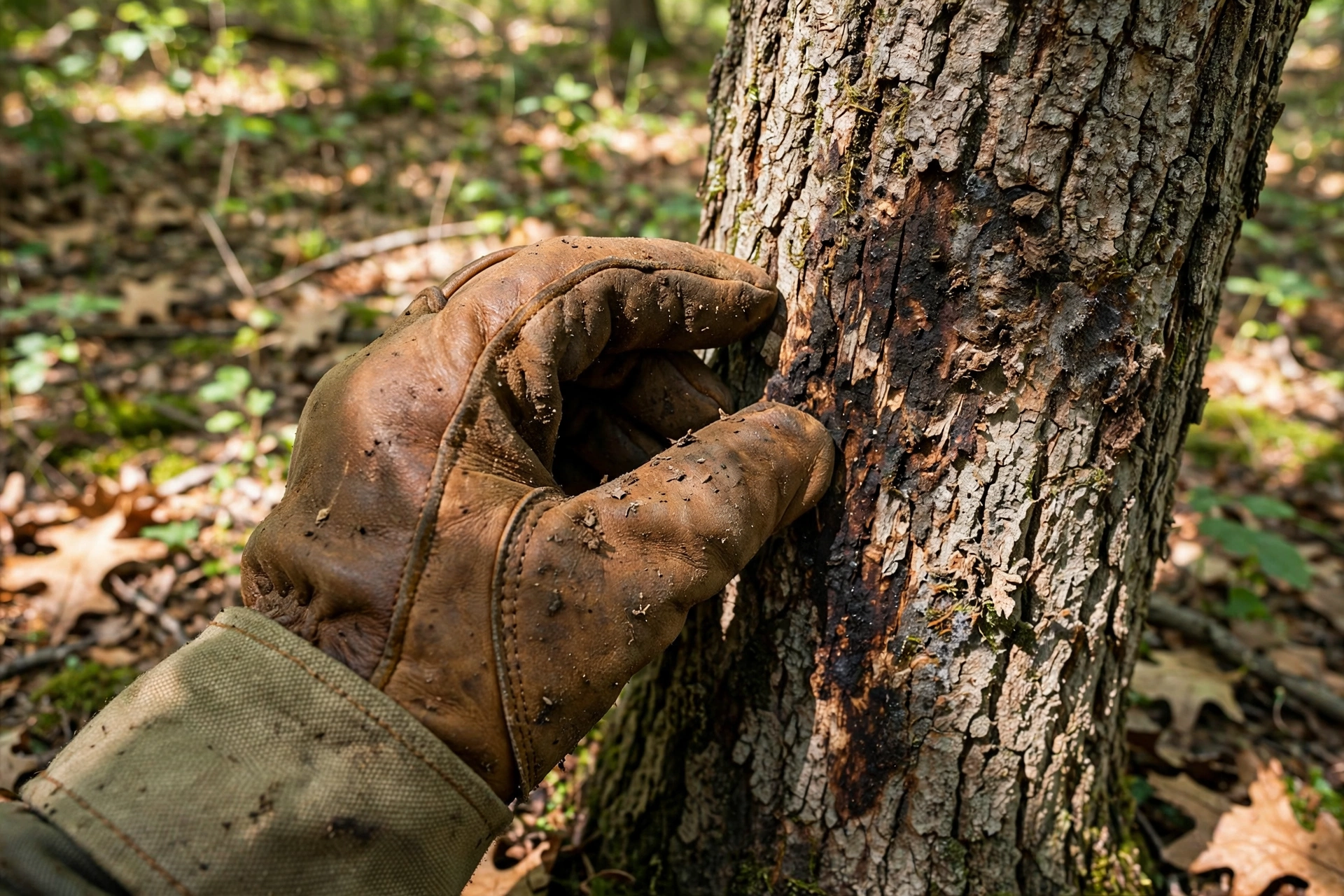
Two kinds of trees get a free pass: the very young and the visibly sick.
Newly planted trees. A first-season tree is running on fumes — it lost much of its root system at the nursery and spends everything growing new roots. Every leaf is a food factory funding that work. Prune now and you cut its income at peak expense. We see it every spring in subdivisions toward Dunlap and Washington: a homeowner plants a maple, “shapes it up” the same weekend, and calls by August asking why it’s half-dead. Leave new trees alone for one full growing season — light shaping can start in year two. (Removing anything broken at planting time is triage, not pruning.)
Trees with undiagnosed disease. Spotted leaves, oozing bark, dieback from the tips — if you don’t know the cause, don’t cut. Pruning spreads pathogens on blades from tree to tree, yard to yard. If you must cut, disinfect tools between every cut and bag the debris instead of chipping it. Better: get a diagnosis first. An ISA Certified Arborist can usually name the problem in one visit, and treating the actual disease beats guessing with a saw. Our tree pruning benefits guide shows what well-timed pruning does — the flip side of this whole article.
Your Central Illinois Pruning Calendar
Tape this inside the garage cabinet next to the loppers.
| Tree type | Best window | Avoid |
|---|---|---|
| Oaks (red, white, bur, pin) | November–March | April–October (oak wilt) |
| Elms | November–March | April–September (Dutch elm disease beetles) |
| Maples, birches, walnuts | Late winter (Feb–Mar); or summer after full leaf-out | Fall (heavy sap bleeding) |
| Flowering trees (crabapple, redbud, dogwood) | Right after spring bloom fades | Late summer–fall (cuts off next year’s buds) |
| Fruit trees (apple, pear, cherry, plum, peach) | Late winter, before buds swell | Fall and deep winter cold snaps |
| Evergreens (pine, spruce, fir) | Late winter to early spring | Late summer–fall (tender growth won’t harden) |
| Newly planted (any species) | Light shaping starting year two | First full growing season |
| Storm-damaged or hazardous limbs | Immediately — any time of year | Waiting on safety issues |
Elms get their own row because Dutch elm disease spreads like oak wilt — bark beetles carry the fungus to fresh wounds, active spring through fall. Same dormant-season logic. Flowering trees are the exception: prune right after they bloom, since they set next year’s buds over summer — fall pruning cuts off the spring show.
The last row is the trump card: safety beats the calendar in every season. The Morton Arboretum publishes excellent Illinois-specific pruning guidance if you want to go deeper. And remember the real math: a $350 winter pruning beats a $2,000 removal caused by a free DIY cut in May. Our tree trimming cost guide has Peoria pricing.
When Not to Trim Trees: The Seasonal Cheat Sheet
Boil it down: winter is for pruning, spring and summer are hands-off for oaks, and fall is for raking leaves — not cutting branches.
Prune or Wait? The Four Seasons
WINTER (Dec–Mar)
PRUNE
Dormant season. Safest window for nearly everything, including oaks.
SPRING (Apr–May)
WAIT
Oak wilt season opens. Beetles active. Leave the oaks alone.
SUMMER (Jun–Aug)
WAIT
Oak wilt + heat stress. Storm damage cleanup only.
FALL (Sep–Nov)
WAIT
Spores peak, wounds heal slowly. Worst pruning season of the year.
Safety hazards are the exception in every season — remove dangerous limbs immediately.
Three seasons of restraint, one season of work. Most Peoria homeowners can handle nearly all pruning in February and March — trees are bare so you can see the structure, the ground is firm, and cuts seal fast come spring. Missed the window? Don’t panic-prune in April. A shaggy tree for one more year beats a tree fighting oak wilt — put “prune trees” on next February’s calendar, next to “schedule furnace check.”
Related Articles
- Tree Trimming vs Pruning: A Peoria Homeowner’s Guide
- How Many Branches Can You Prune Off a Tree at Once in Peoria?
- Frost Hits Peoria Tonight: 5 Last-Minute Tree Tasks Before the Cold Sets In
FAQs — When Not to Trim Trees in Central Illinois
Can I prune my oak tree in May if I paint the pruning wound?
Paint helps but doesn’t make it safe — May is peak beetle season. Wait until November except for storms.
Is it ever okay to prune in the fall?
Only dead, broken, or hazardous limbs. For the rest, fall is the worst choice — spores peak and wounds stay open all winter. Wait for winter dormancy.
My maple bleeds sap when I prune it in late winter — is it dying?
No — that’s normal and harmless. Maples, birches, and walnuts push heavy sap in late winter; cuts can weep for weeks. Prune them in summer after full leaf-out instead.
Can I trim branches touching my roof in the middle of summer?
Yes — safety pruning is fine any time of year. Keep cuts minimal and clean, cut back to a lateral branch, and save reshaping for winter.
What months should I avoid pruning fruit trees in Illinois?
Skip summer and fall — prune apples and pears in late winter dormancy, and cherries right after spring harvest. Summer cuts invite fire blight; fall cuts won’t harden before frost.
A storm just tore branches off my tree in July — do I really have to wait until winter?
No — storm damage is the big exception. Clean torn limbs promptly with the three-cut method back to sound wood so bark doesn’t tear; ragged tears seal poorly and invite decay. Cosmetic reshaping can wait.
Get Your Free Estimate
Not sure whether your tree can wait until winter — or whether that limb needs to come off now? We’ll come look at it free anywhere in the Peoria area — Peoria, East Peoria, Peoria Heights, Bartonville, Washington, Morton, Pekin, Dunlap, Chillicothe — and give you a straight answer. Seventeen years, ISA Certified Arborists, licensed and insured.
Call 309-250-8333 for 24/7 emergency service, or grab a free estimate online — we usually respond the same day.
Peoria Tree Removal Co.
https://treeremovalpeoriail.com/
114 W Forrest Hill Ave, Peoria, IL 61604, USA
Tree Service Company
2 Responses